

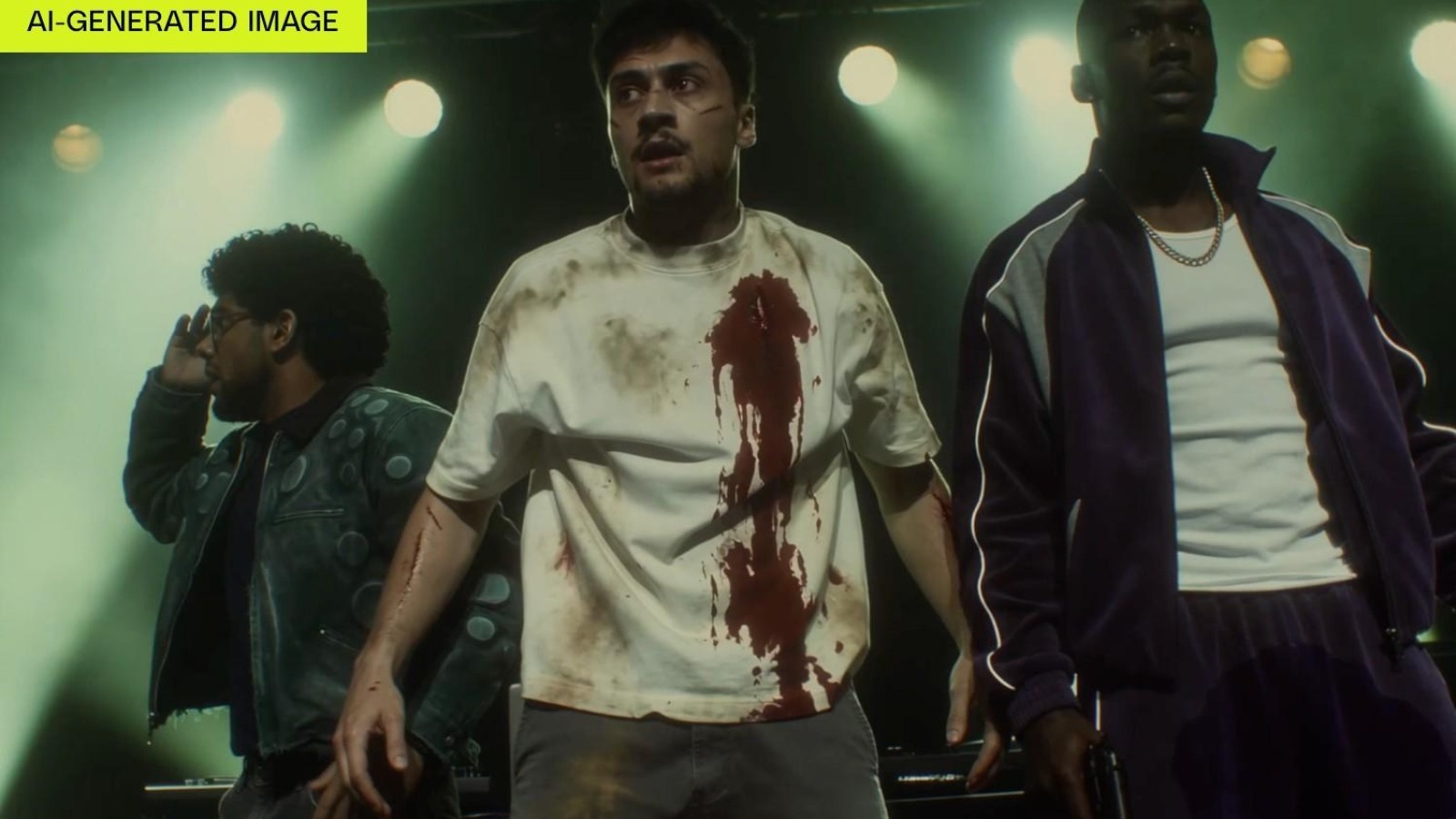
Higgsfield has released Cully Hill Boys, one of the few AI-generated films of 2026 that comes close to looking and feeling like a traditionally produced feature. The project follows a trio of struggling rappers from East London whose lives are upended when they accidentally steal a crime lord’s money, unfolding much like a direct-to-video action-comedy.
The story introduces three longtime friends, Cal, Horace and Oli, who cannot work out how to realise their dreams of becoming well-known musicians. The film blends pub banter and increasingly glitzy fantasies of fame with hyperkinetic smash cuts to action sequences in which the characters fight or flee armed goons, echoing the sort of feature audiences might expect from directors such as Edgar Wright or Guy Ritchie.
Human artists behind the AI film
A large part of the film’s strength is rooted in how much of Wright and Ritchie’s style has been built into it. Alongside posting the film online, Higgsfield published many of the prompts used to make it, several of which mention Wright and Ritchie by name. Combined with a script written by a real screenwriter, this underlines how the strongest parts of such projects are drawn from actual human artists.
Cully Hill Boys is codirected by Adilet Abish and Aitore Zholdaskali, who also helmed Higgsfield’s Hell Grind feature. It is based on a script initially written by Tim Planagan before it reached the Black List screenplay submission service for unproduced projects. After acquiring the script’s AI production rights, Higgsfield brought in streamer Mikyle “N3on” Rafiq, basketball content creator Matt Kiatipis and UFC fighter Israel Adesanya to “star” as its leads.
Licensing, rights and a showcase for Cinema Studio
None of the film’s actors shot any scenes on set, but each signed licensing agreements with Higgsfield allowing their likenesses to be used in the project. While Planagan gave Higgsfield the ability to adapt the story using generative AI, he still retains the rights necessary for it to be produced traditionally.
Rather than seeking a theatrical release, Higgsfield, a service that sells access to various AI models, uploaded the film and most of its constituent prompts online to demonstrate what is possible with its Cinema Studio suite of AI filmmaking tools. The film also functions as a promotion for Higgsfield’s newly added Seedance 2.5 functionality, and highlights new ways that studios can collaborate with digital creators.
Each of the three leads was cast through likeness licensing rather than on-set performance, and Higgsfield published the prompts used to generate the film publicly alongside its release.
Source
Image: theverge.com