

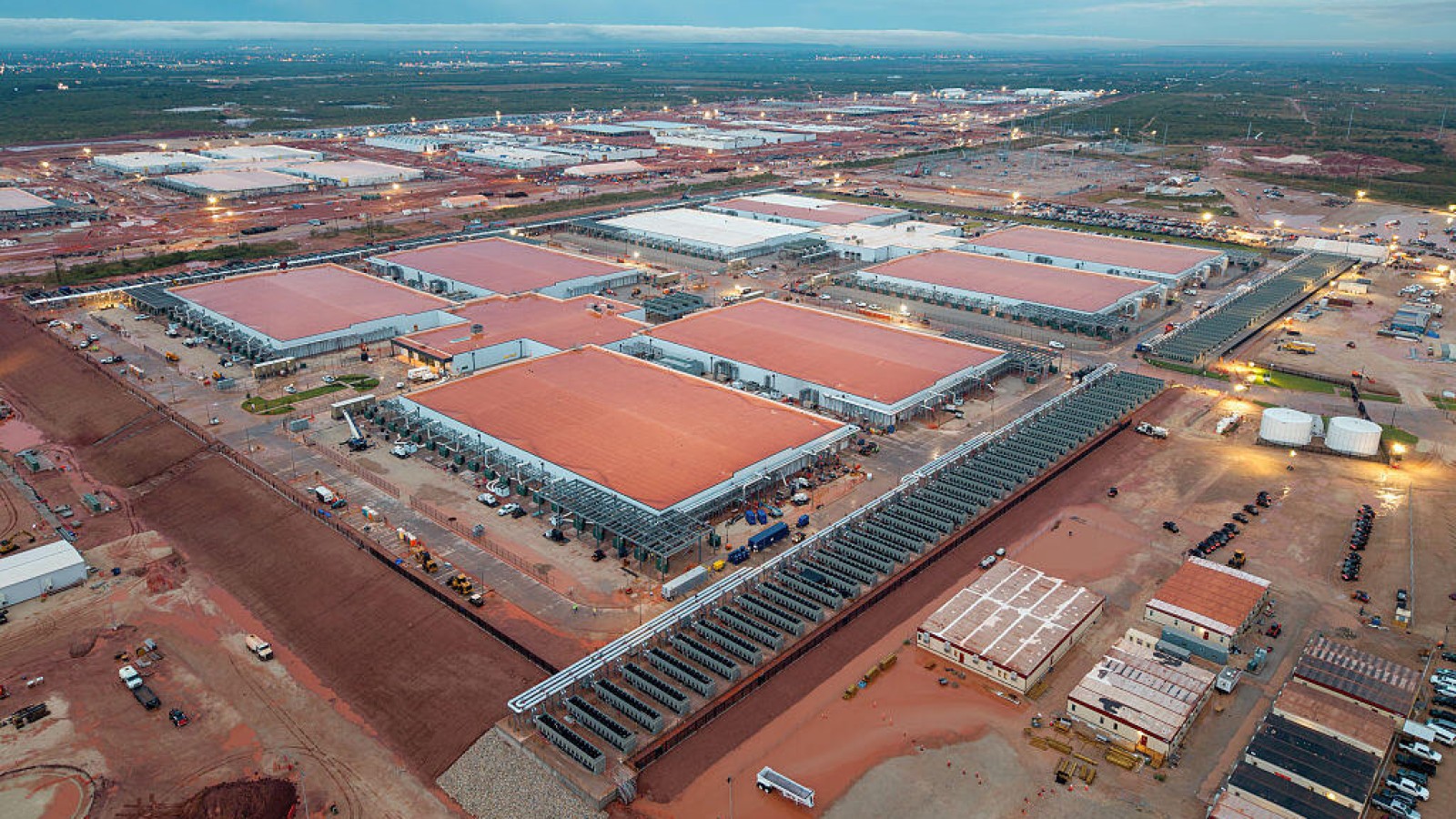
US data centres under construction by Amazon, Google, Meta and Microsoft could collectively emit 101.5 million tons of carbon dioxide each year once fully operational, according to a new analysis of the 60 largest sites. That figure represents roughly 7% of all 2025 US power-sector emissions, equivalent to running 27 coal power plants or adding 24 million petrol-powered cars to the roads.
The estimate arrives as public opposition to America’s data centre and artificial intelligence boom continues to grow, with communities raising concerns over water use, land acquisition and noise. Environmental campaigner Erin Brockovich has begun mapping communities affected by data centre construction and operations, and polling indicates most Americans do not want AI facilities built near them. A mounting carbon problem now adds to those existing concerns.
Emissions Rising Across Big Tech
Only five years ago, major technology companies publicly committed to reducing their emissions, making the latest findings a notable reversal. Amazon’s emissions climbed 16% between 2024 and 2025, driven by data centre construction and a 34% rise in electricity purchases. Microsoft reported a 25% increase in estimated emissions over the same period, while Google’s parent company Alphabet reported an 18% year-on-year rise using its own adjusted metric.
Researchers attribute the increases to a combination of factors, from the sheer scale of demand for AI infrastructure to a political environment under the Trump administration that has rolled back climate rules and clean energy tax credits in favour of fossil fuels.
Grid Strain and Fossil Fuel Growth
US gas-fired energy capacity under development nearly tripled in 2025. Analysts predict the country’s existing gas-burning infrastructure could grow by up to 50% if every currently planned project is built. Clean energy additions have not stalled entirely, but utilities are racing to meet data centre demand with power that is available immediately and runs around the clock. Fossil fuels such as gas and coal currently suit that requirement better than wind or solar until large-scale storage technology matures.
As a result, technology giants are leaning more heavily on renewable energy credits to bridge the gap between their public commitments and the reality on the grids. That approach is expensive and likely to be scaled back over time as pressure on profitability increases.
Utilities are increasing production to meet current and projected demand, preparing to roll out tens of thousands of megawatts of capacity across the US specifically to serve data centre infrastructure. Three-quarters of the operators serving these 60 sites are building or planning new gas capacity, and a third of those running coal plants are delaying planned retirements.