
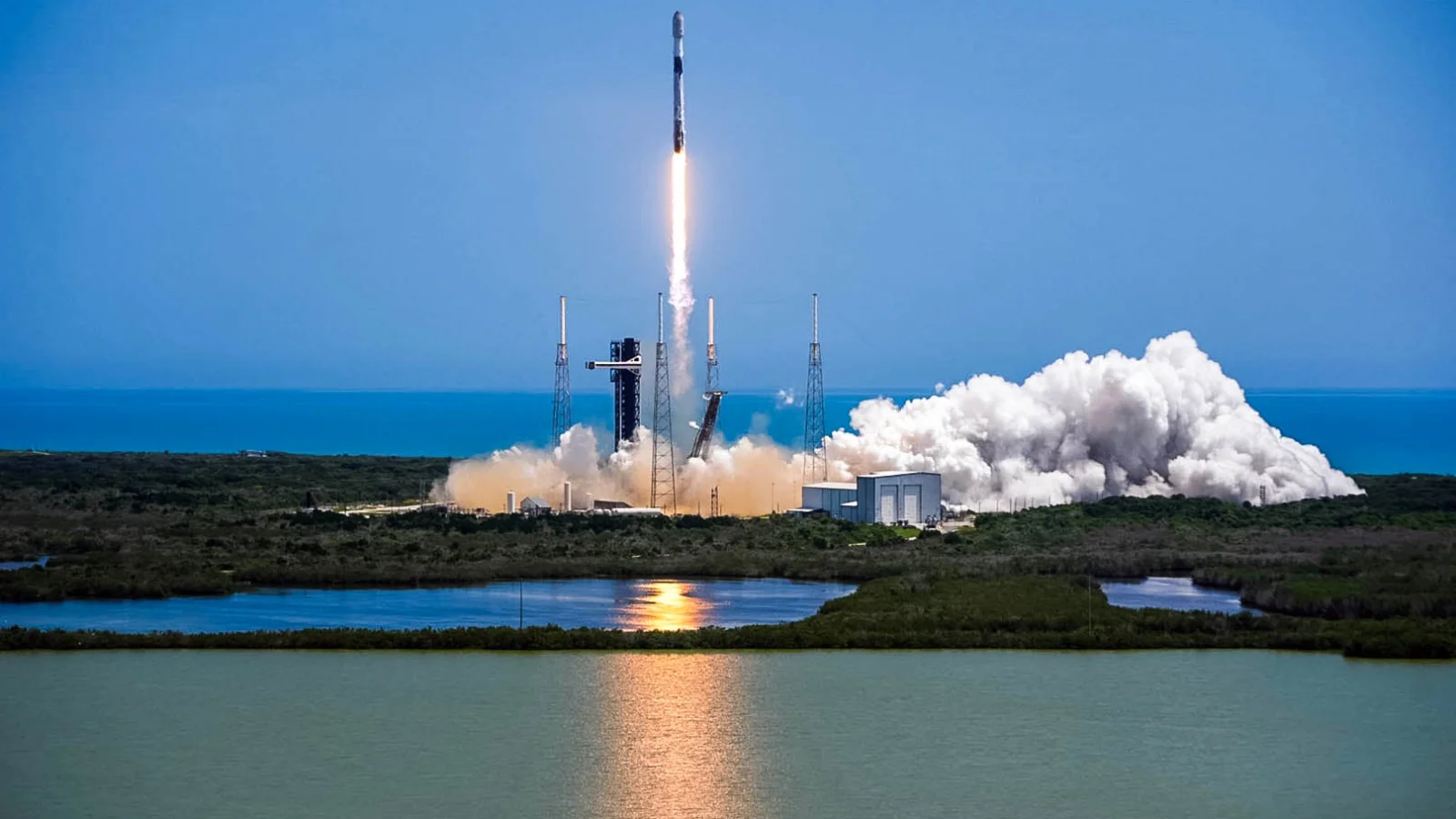
SpaceX has confirmed plans to build its own terrestrial mobile network, setting up a potential challenge to AT&T, T-Mobile and Verizon in the United States. During its Q2 2026 earnings call, the company reiterated that it intends to avoid the traditional, capital-heavy approach of erecting cell towers. Instead, it wants to rely on existing Starlink internet dishes and spectrum acquired from EchoStar.
The announcement has divided telecom analysts. Most doubt the idea is workable in its current form, while a smaller group believes the rocket company may be onto something with its unconventional method.
A network without traditional towers
Standard mobile networks broadcast signals from cell towers. SpaceX currently holds just 65 MHz of spectrum, whereas each of the three major carriers commands roughly 300 MHz. The company has no plans to build towers, viewing them as too costly and too slow to deploy.
Its alternative is a hybrid network. Alongside some basic terrestrial infrastructure and satellites, the plan involves mounting femtocells, which are small cellular base stations, onto Starlink dishes while expanding its spectrum holdings. Starlink dishes need a clear view of the sky to connect to satellites and deliver an internet connection. By integrating cellular-radio equipment that operates on mobile spectrum bands, the dishes would effectively become micro cell towers, casting signals across the surrounding area.
The company is also preparing to launch its next-generation V2 satellites next year. The current system uses around 650 satellites and 5 MHz of spectrum drawn from mobile network partners, supporting only messaging and light data. The new constellation will feature more satellites and draw on additional EchoStar spectrum capacity to support broadband data and IoT connectivity.
Theory meets reality
Scepticism remains widespread. BNP Paribas Equity Research senior analyst Sam McHugh argues the company has not fully thought the plan through, noting that Starlink broadband penetration is not yet high enough to make femtocell deployment a reliable wireless solution. Given SpaceX’s substantial financial commitments to data centres and AI chips, McHugh questions whether funding a fourth national carrier is a sound use of resources.
Doubts about the maturity of the plans were reinforced when SpaceX incorrectly placed the combined wireless revenue of the three major carriers at 600 billion dollars, roughly £445 billion, when the actual figure is closer to 220 billion dollars, roughly £163 billion.
Coverage presents a further hurdle. Network consultant Paul Rhodes likens Starlink’s current Direct-to-Cell service to 2G, predicting that femtocells would, at best, enable a service comparable to 3G. He noted that while femtocells would improve on the existing offering, matching terrestrial networks with a fully Starlink-based service would remain a considerable challenge in a market dominated by 5G.
SpaceX presently holds 65 MHz of spectrum against the roughly 300 MHz held by each of the three established carriers.
Source
Image: phonearena.com