
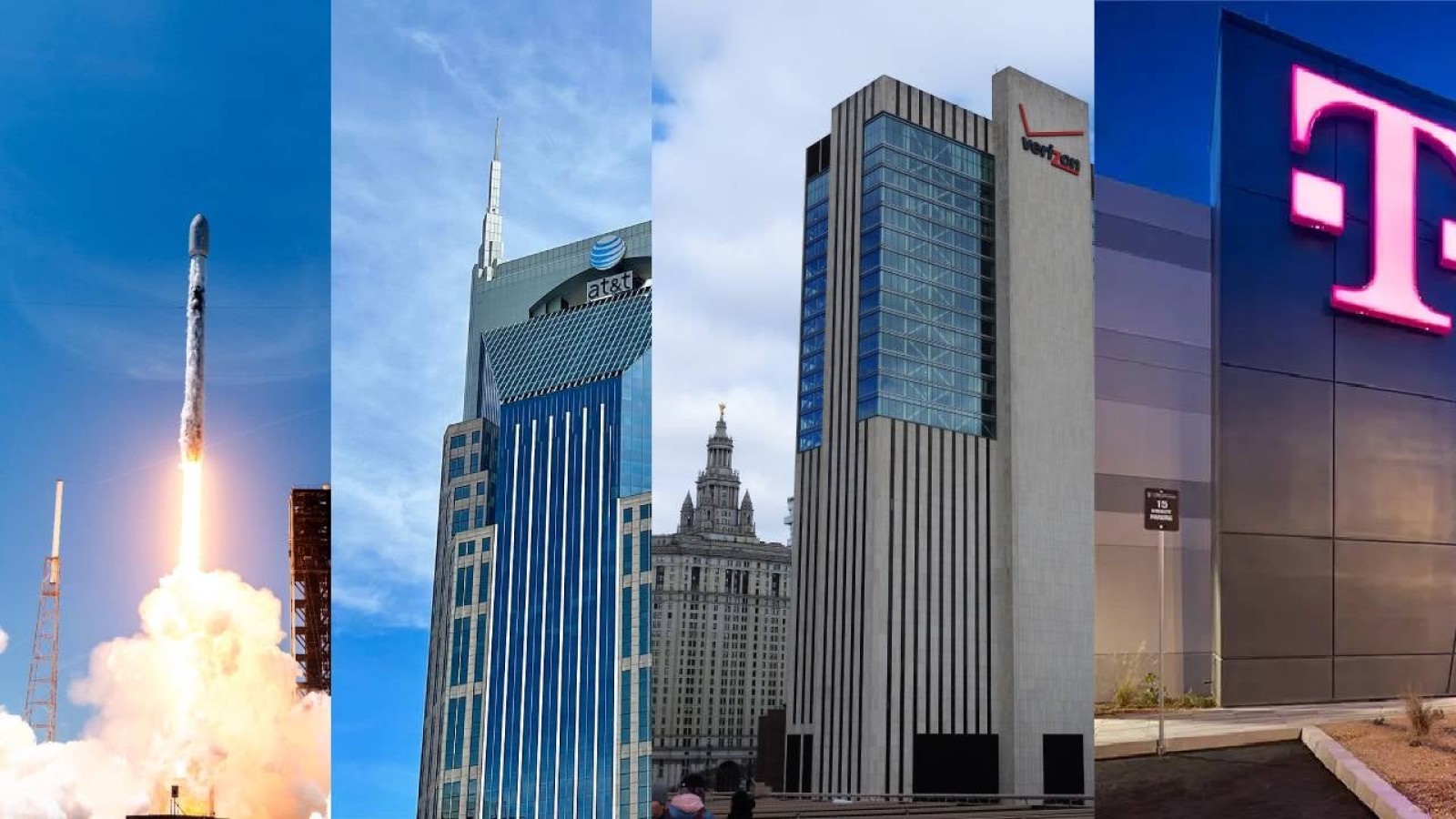
SpaceX has been positioned as a potential rival to AT&T, T-Mobile and Verizon, yet analysts remain largely unconvinced that the company can turn that ambition into reality. The proposal centres on using Starlink dishes and femtocells to deliver mobile coverage, but industry experts have outlined several reasons why the concept is unlikely to succeed.
The convenience gap is stark. Customers of the three established American carriers simply insert a SIM card or activate an eSIM and carry on. SpaceX’s approach is considerably more involved. The plan would see small cellular base stations mounted onto existing residential Starlink terminals. Users would have to remain near a femtocell to receive service, and doing so would draw on broadband capacity, degrading performance for everyone connected.
Earl Lum, founder of EJL Wireless Research, described the strategy as one of the poorest ideas he had encountered in four decades. He noted that an outdoor small cell draws around 5 watts per channel and requires radios and antennas, making installation on residential properties difficult. Deploying a proper setup would mean fixing a pole to a roof capable of supporting three radios and three antennas, alongside securing the standard permitting required for any macro cell site. A lower-powered 1-watt indoor transmitter, by contrast, would barely cover a single dwelling, with Lum suggesting that five units would be needed to serve a large house.
Power and Backhaul Constraints
Paul Rhodes, a wireless network and EdgeDC expert at Real Wireless, raised similar doubts. He pointed out that a 60-watt Starlink dish lacks the power and backhaul capacity to handle multiple cellular radios, leaving the system with far more RF capacity than it could realistically support.
The difficulties intensify in urban markets, where Starlink is less widely adopted than in rural and suburban regions. A network of femtocells would likely deliver patchy coverage, making it an unappealing choice for city dwellers who already have access to cheaper, more reliable alternatives.
SpaceX could look towards multi-dwelling units as a target, but that route proved troublesome for Starry. Building management would be unlikely to permit residents to install Starlink dishes on their balconies.
The Cost Question for Consumers
Electricity consumption presents a further obstacle. Amit Nagpal, a partner at Aetha Consulting, warned that turning customer terminals into base stations could send household electricity bills soaring, potentially quadrupling costs for those affected. He questioned whether customers would tolerate such a sharp increase, anticipating significant backlash.
Even if SpaceX managed to overcome the technical hurdles, the use of Starlink equipment as a miniature cell tower would push power costs onto customers who would have little appetite to pay them.
Elon Musk has continued to promote direct-to-device connectivity as part of the company’s broader ambitions, but the analysts assessing the femtocell proposal maintain that the model faces substantial technical, regulatory and financial barriers before it could compete with the established carriers.
Source
Image: phonearena.com