

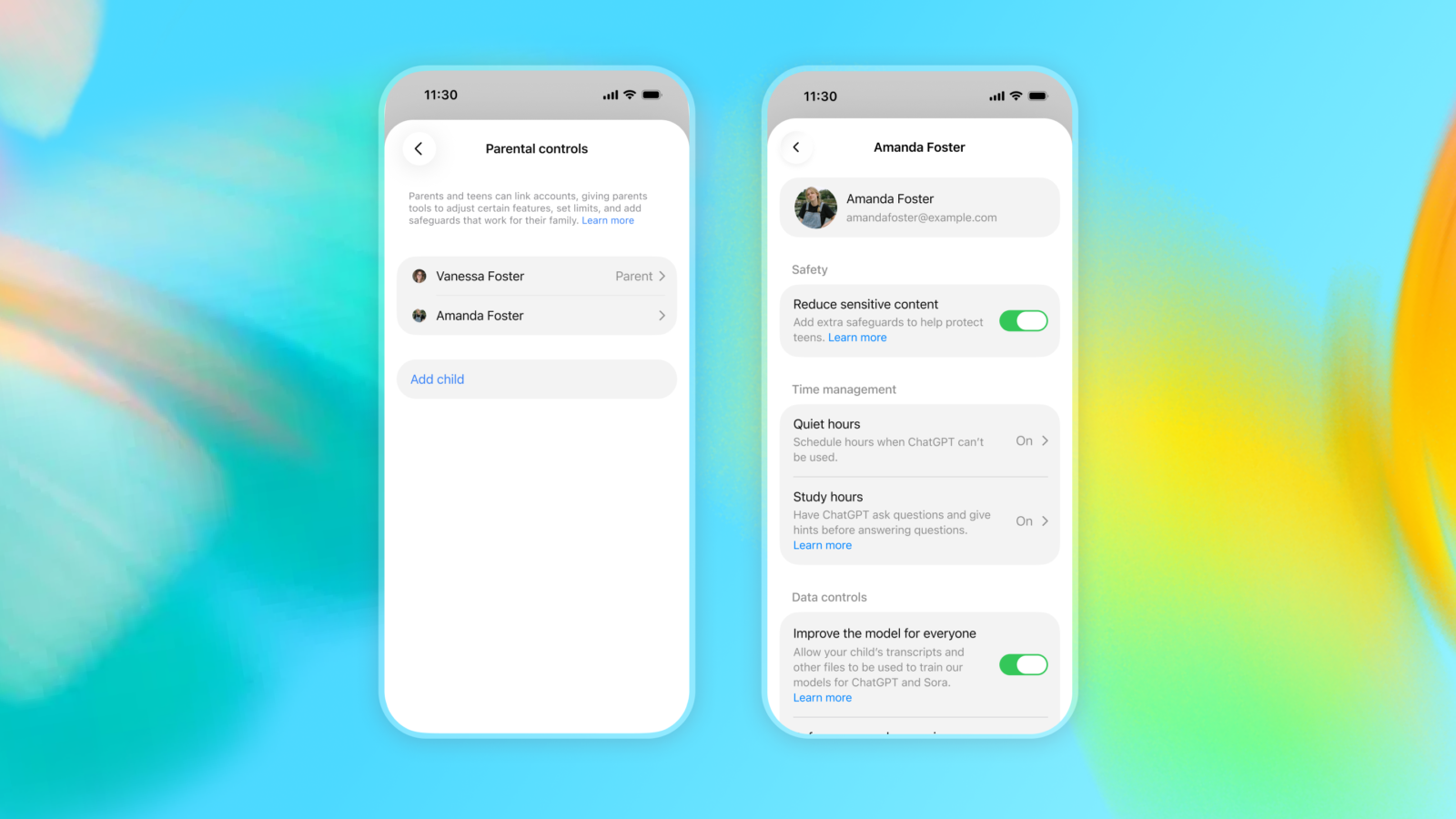
ChatGPT for Teens has been launched by OpenAI, introducing a dedicated version of its chatbot aimed at younger users amid mounting concerns over how teenagers interact with generative AI tools. The company confirmed the rollout on Tuesday.
Users aged between 13 and 17 will automatically be directed to the teen-specific version, which features parental controls, stronger safeguards and notifications prompting them to take breaks. Many AI companies, including Google, permit those aged 13 or older to use their chatbots, while Anthropic requires users to be 18 or over.
OpenAI says it built the product around four guidelines: putting teen safety first, encouraging real-world support, treating teens like teens and being transparent about how its systems should behave. The protections now folded into the chatbot are similar to those built into Instagram teen accounts.
The teen experience in ChatGPT
OpenAI says the model is intended to expand educational opportunity and to provide support outside the classroom. ChatGPT for Teens includes a new Study Mode that offers step-by-step guidance on concepts and homework materials, while detecting when students attempt to use the model as a shortcut for cheating.
With the Study Hours feature, teenage students and parents can set parameters so that Study Mode turns on by default. The product also features quizzes and visualisations intended to support learning.
“Not every student has someone at home who can help when they get stuck or have questions with their homework. With the right guardrails, AI can help fill that gap,” said Racquel Gibson, a Miami high-school maths teacher, in OpenAI’s blog post about the product.
Safeguards against dependency
ChatGPT for Teens includes built-in protections against overuse and is designed to help prevent emotional dependency, including the chatbot becoming a substitute for real-world companionship and relationships. A survey released last year by Common Sense Media found that 72% of teens regularly use chatbots for companionship and advice.
OpenAI states the teen experience is designed to support real-world relationships and healthy habits, with break reminders that encourage teens to step away and product cues that consistently identify ChatGPT as AI. The model will reportedly block attempts at romantic or sexual roleplay and will not respond to prompts in a way that implies it has feelings or consciousness.
Other safeguards include reminders cautioning teens not to share sensitive information or images, as well as onboarding instructions on how best to use the chatbot safely. OpenAI has repeatedly faced criticism over ChatGPT’s sycophancy and its lack of age-specific safety measures, resulting in a series of legal actions.
One lawsuit involved a family who alleged that their 16-year-old son took his own life after the chatbot encouraged his suicidal ideation. The publicity led OpenAI to pledge to add safeguards to its models.