

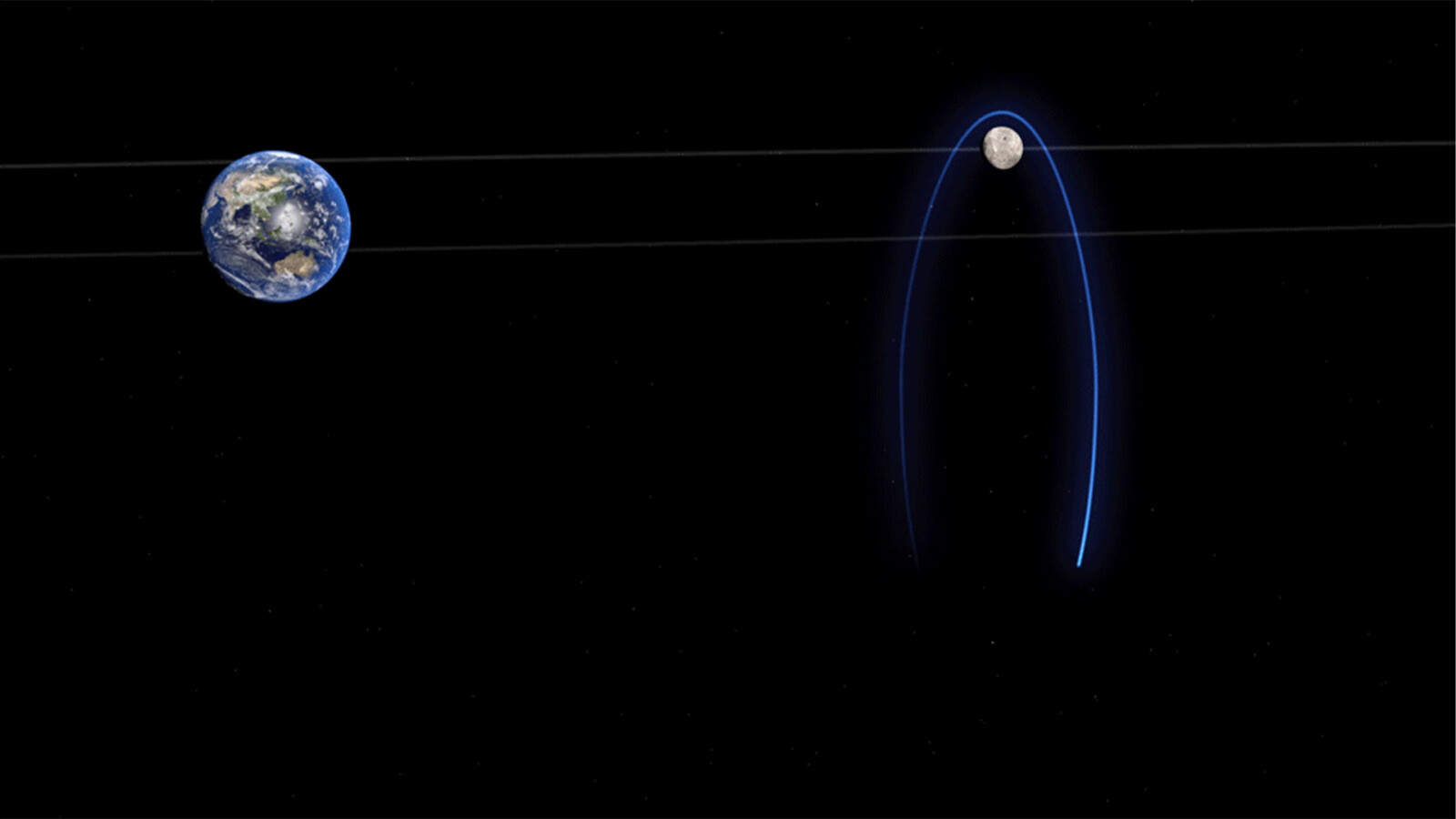
Lunar traffic control is moving from science fiction towards reality, as engineers develop a system to manage the growing number of spacecraft expected to operate around the Moon. Historically, only one object at a time has been sent to the Moon, effectively giving each mission the entire route to itself. That is set to change with NASA’s planned lunar base, which is expected to bring far more concurrent traffic and, with it, the need for formal rules of the road.
Engineers from Texas A&M, Purdue and NASA’s Johnson Space Center have collaborated to draft some of those rules, outlined in a recent study. The challenge is more complex than it might first appear. Spacecraft orbiting the Moon are expected to use the near-rectilinear halo orbit (NRHO), an egg-shaped path influenced by gravity from the Moon, Earth and deep space sources. This orbit carries spacecraft around both poles of the Moon.
Why a busier orbit needs new rules
Managing a single space station in the NRHO is relatively straightforward. Complications arise quickly, however, when the Orion crew capsule, uncrewed cargo ships and lunar landers all share the same orbit. That mix creates the need for an air traffic control system comparable to an airport on Earth.
“Collisions and serious damages could happen. To ensure crew safety and mission success, effective traffic management in the NRHO is crucial,” said Diane Davis, associate professor of space engineering at Texas A&M and an author of the study. “The future of lunar explorations depends as much on the traffic management as it does on the rocket science.”
NASA announced plans for a Moon base in March, aiming to establish a sustained human presence on the lunar surface. The three-phase programme would begin by sending equipment to the Moon, then building a base powered by nuclear technology and other new systems, before finally staffing it with people on a rotating basis. The effort is expected to take most of the coming decade.
How the lunar system works
There is nothing tangible to see with this traffic control system, but anyone who has flown in an aeroplane has experienced its earthly equivalent. Air traffic control on Earth manages holding patterns so aircraft do not collide midair, assigns runways and keeps the sky clear for departures.
The lunar control system functions in much the same way. Spacecraft arriving and departing may be headed for the surface or loitering while they wait for their opportunity to return to Earth. These vehicles must be carefully managed to prevent collisions, and they must also conserve fuel to keep mission costs down.
“Larger orbits at the moon that are suitable for staging an Orion and lander mission to the surface take many hours or days to make a revolution around the moon,” Davis said. To keep propellant costs low, there are particular points along the orbit where it is most efficient to leave a loiter station.