
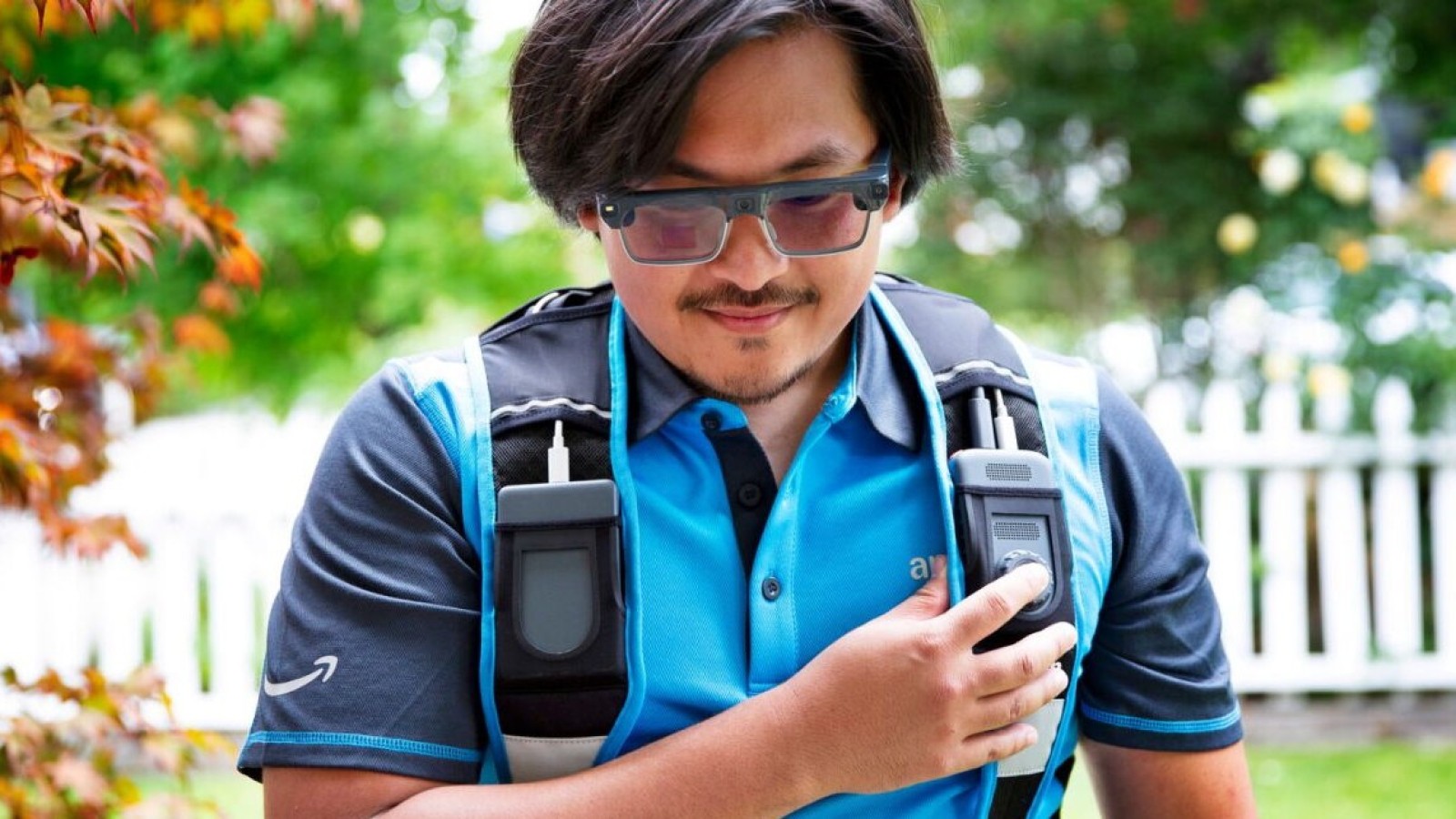
Amazon smart glasses are set to be worn by thousands of delivery drivers, prompting fresh questions over surveillance and privacy. The e-commerce company has confirmed plans to equip 5,000 drivers with the AI-powered eyewear by the end of 2026, expanding to more than 20,000 by the end of 2027.
The rollout is being led by Amazon executive Viraj Chatterjee. According to the company, the AI smart glasses are designed to track a driver’s shift from beginning to end, with the aim of delivering parcels more quickly and reliably, reducing errors and offering hands-free guidance throughout the working day.
How the glasses capture images
While a driver is on foot, the glasses capture static photos of everything in their line of sight at a high frequency, likely every few seconds, generating thousands of images per shift. These photos may include parcel recipients, people on the street and private property.
The captured images are then passed to human employees at Amazon for analysis before being fed into Wellspring, the company’s generative AI platform used to map neighbourhoods and improve the accuracy of delivery locations. Chatterjee indicated that customer opt-out options have not yet been considered.
Amazon spokesperson Leigh Anne Gullett disputed characterisations of the technology as a surveillance tool, stating that such a suggestion “fundamentally mischaracterizes the technology and its purpose.” Gullett said Amazon continues to incorporate feedback during the pilot period and that participation is voluntary for both delivery partners and drivers.
Privacy safeguards and open questions
When questioned about the potential for the cameras to be used for surveillance, Chatterjee explained that images will be blurred before human reviewers see them if they contain identifying information, such as a number plate or a face.
Gullett added that privacy protections have been built into the technology from the outset, including automatic data blurring, strict access controls and a physical hardware privacy switch. Despite these measures, there appears to be no way for Amazon customers to know whether such images exist, with reportedly no option to view them or request their deletion. The only route to accessing those images is said to be through a warrant.
There is also the added vulnerability of these AI devices to hacking. Given that the content may contain personally identifiable information, Amazon would need to establish strict safeguards to protect it. Amazon aims to have 5,000 drivers wearing the glasses by the end of 2026.