
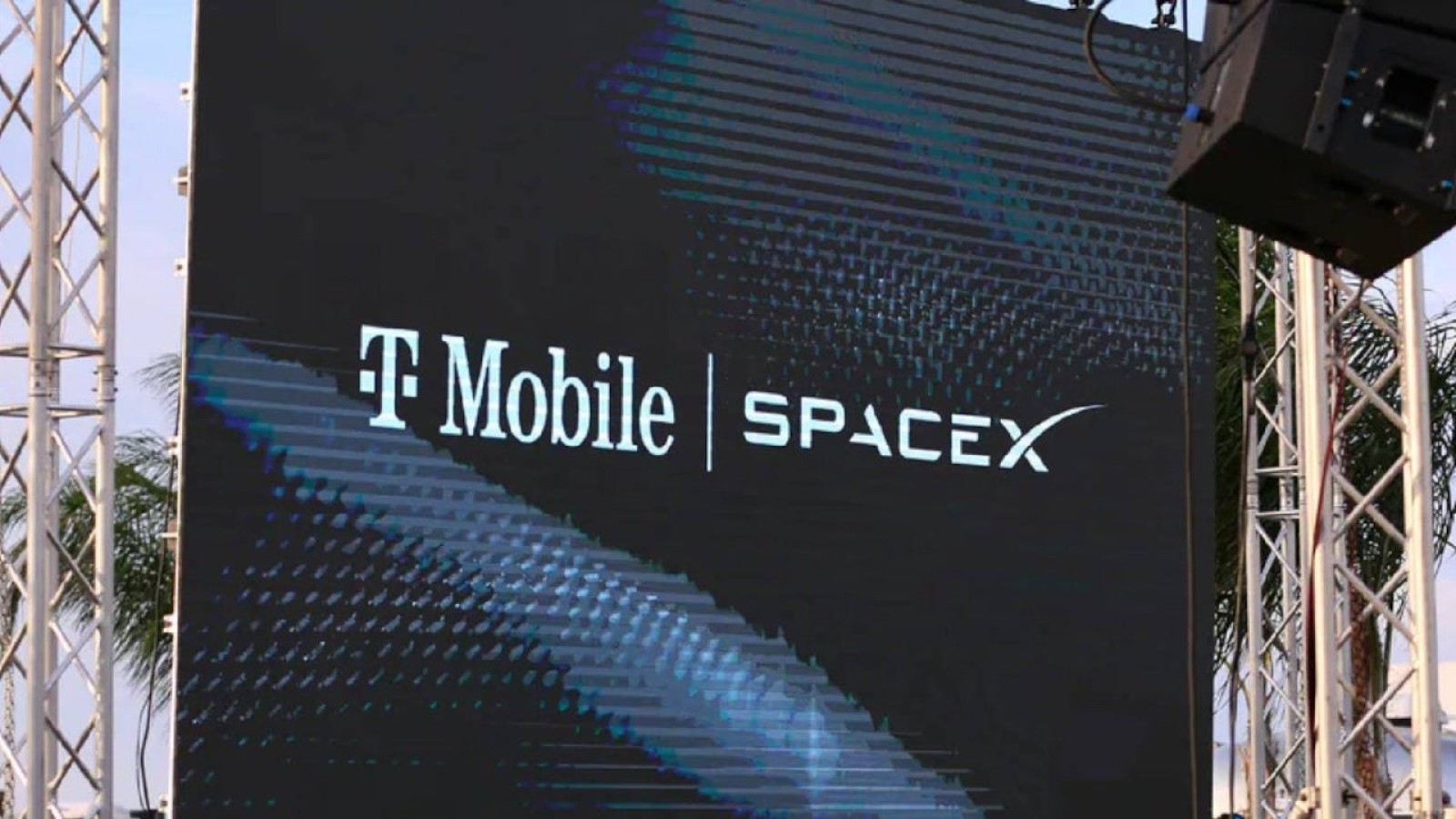
T-Mobile chief executive Srini Gopalan has said that SpaceX and its Starlink service do not represent a genuine threat to the operator, arguing that concerns over satellite companies encroaching on the mobile market have been overstated.
The comments follow a period of pressure on the three largest wireless carriers in the United States, with speculation mounting that SpaceX, the satellite communications and space transportation firm, intends to move into territory long occupied by Verizon, AT&T, and T-Mobile.
SpaceX signals intent to win over customers
Talk of SpaceX’s mobile ambitions intensified after founder Elon Musk and company president Gwynne Shotwell addressed the firm’s second-quarter earnings call. Shotwell struck a confident tone, stating: “I anticipate us to be able to acquire quite a few of their customers, because I think our service will be better.”
SpaceX has discussed placing femtocells, the low-powered compact cellular base stations used to strengthen indoor mobile signals, on existing Starlink dishes. The approach would reduce the costs associated with building cell towers and acquiring spectrum. Worries about SpaceX have weighed on the share prices of T-Mobile, Verizon, and AT&T, though Gopalan believes investors are overstating the challenge.
Gopalan plays down the satellite challenge
Gopalan replaced Mike Sievert on 1 November of last year, taking the top role during a period of controversy tied to T-Mobile’s shift to a digital-first model. That move required representatives and customers to use the T-Life app for almost all transactions, whether inside stores or placed by customers from home.
The chief executive views satellite technology as “complementary” to traditional wireless networks rather than a rival to them. “The threat posed to mobile operators from satellite companies such as Starlink has been exaggerated and I struggle to see which consumer problems they would solve by entering the market,” Gopalan said.
The obstacles facing any Musk move
One straightforward route for Musk to pursue his mobile goals would be for SpaceX to make an unsolicited tender offer for T-Mobile, Verizon, or AT&T. A bid for T-Mobile would prove difficult, however, as Deutsche Telekom owns 53.7% of the US carrier. Any deal would need to pass through Deutsche Telekom, which harbours its own ambition to acquire T-Mobile outright.
A combination of Deutsche Telekom and T-Mobile would rank as the largest technology deal in history and would create the world’s most valuable telecom company, displacing China Mobile from that position.
Should SpaceX instead consider Verizon or AT&T, it would face each company’s net debt of roughly £90 billion. T-Mobile carries a comparable level of debt, yet analysts suggest that debt poses less of an obstacle to a purchase of T-Mobile, given that both AT&T and Verizon own legacy copper networks.
Source
Image: phonearena.com