
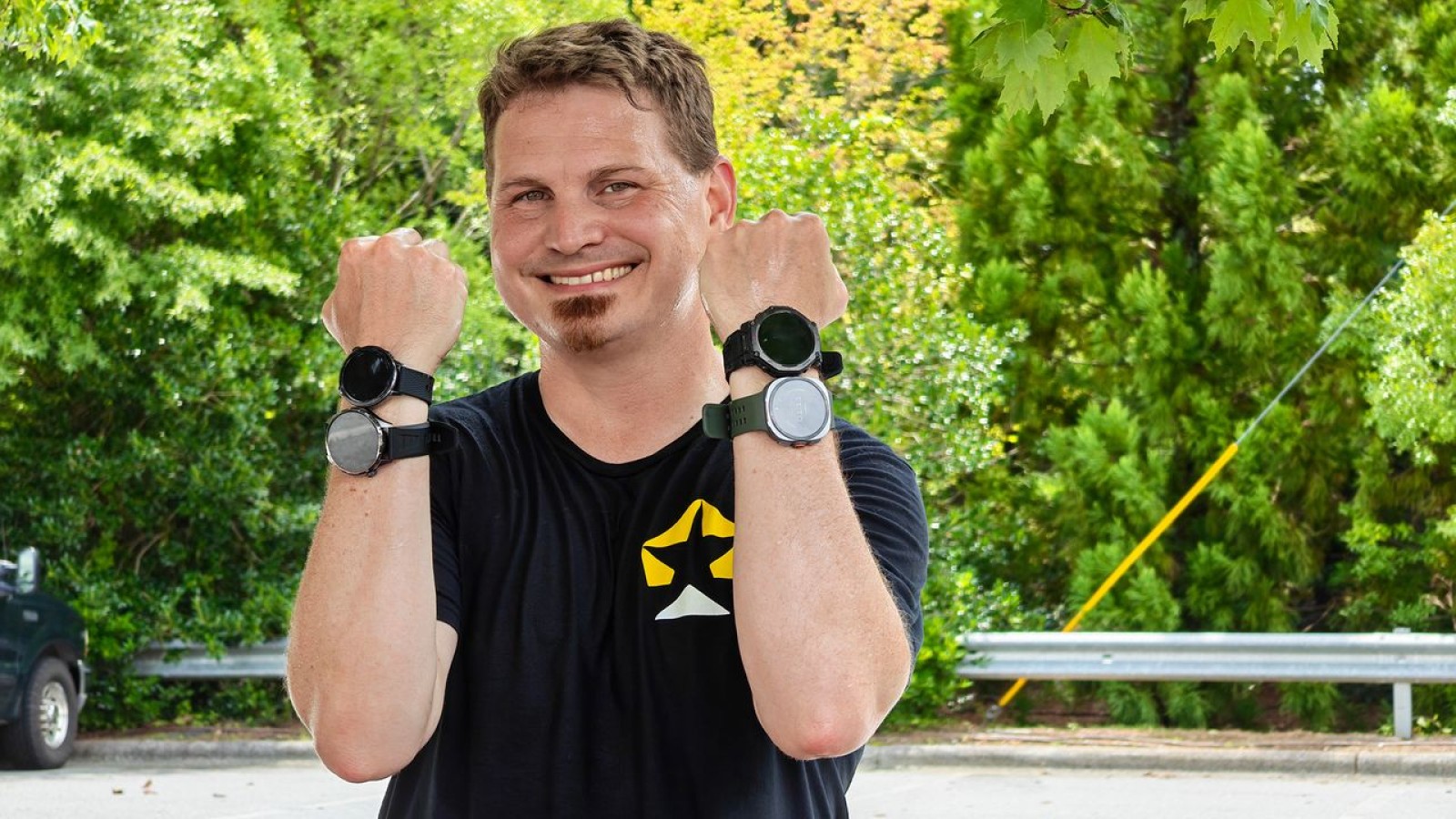
Choosing the right fitness smartwatch in 2026 can be difficult, so a week-long trial pitted four popular models against one another through real-world use. The devices were worn simultaneously during sleep, throughout half-marathon Spartan training runs, and across a 5K Spartan race at the weekend.
The four watches under scrutiny were the Samsung Galaxy Watch Ultra 2, the Honor Watch 6, the Amazfit T-Rex 3 Pro and the OnePlus Watch 3 43mm. Wearing all four at once naturally drew attention, but it allowed direct comparisons of the data each produced under identical conditions.
How the Watches Handled Sleep Tracking
Sleeping with four watches proved less uncomfortable than expected. Most devices collect broadly similar sleep data, though a few offered distinctive features. The Galaxy Watch Ultra 2, for instance, recorded skin temperature measured against a baseline it had established over the previous fortnight.
Recorded sleep time was consistent across the four, ranging from six hours 31 minutes to six hours 43 minutes. Sleep scores diverged more widely: the Honor Watch 6 gave 77, the Galaxy Watch Ultra 2 gave 72, the OnePlus Watch 3 gave 70, and the Amazfit T-Rex 3 Pro gave the lowest at 54. Deep sleep readings varied considerably too, from just over one hour on the Samsung and OnePlus devices to two hours 24 minutes on the Honor.
The number of times awake showed the sharpest contrast. The Honor and OnePlus watches logged two awakenings, while the Galaxy Watch Ultra 2 recorded 18 across 52 minutes, and the Amazfit registered nine. Only the Galaxy Watch Ultra 2 provided skin temperature data during sleep, showing a rise of 1.3°F, while blood oxygen readings appeared on the Samsung and Amazfit devices at 93% and 94% respectively.
The Honor Watch 6 presented the least detailed information, concentrating its findings in a sleep analysis section that uses percentages and simple “normal,” “high” and “low” ranges. The OnePlus Watch 3 offered a clearer view of the data but omitted metrics such as SpO2 and breathing quality. The Amazfit T-Rex 3 Pro’s readings appeared closest to how the wearer actually felt, with its low score of 54 aligning more accurately than the higher figures produced by the other devices.
Moving on to Running and Race Day
Training for the Spartan Beast began several weeks earlier using the Amazfit running coach feature, chosen for confidence in the watch’s measurement accuracy. The T-Rex 3 Pro had already served as a long-standing reference point against which other watches were compared over recent years.
The running phase of the trial covered 12 miles in total, spread across the individual training sessions and the weekend 5K Spartan race, providing the basis for comparing how each device recorded performance during high-intensity outdoor exercise.
Source
Image: androidcentral.com