
The FAA air traffic control system faced repeated disruptions through 2025 and into 2026, with fresh scrutiny now falling on the role of major political donors in efforts to modernise the network. On 6 August, the Minneapolis Air Route Traffic Control Center lost radar and communications for roughly two hours. The outage affected more than 1,100 flights across the centre’s 330,000 square mile, nine-state airspace sector.
Two days earlier, on 4 August, President Donald Trump departed the White House aboard the Marine One military helicopter. As Federal Aviation Administration protocol requires, the pilots attempted to contact Reagan National Airport to request that commercial traffic be halted during the flight. Air traffic controllers never received the transmission and cleared a different aircraft for take-off, which came closer than the minimum safe distance permitted. When the incident was first reported, the White House dismissed it, stating that Trump was never in “harm’s way”.
A Modernisation Drive That Stalled
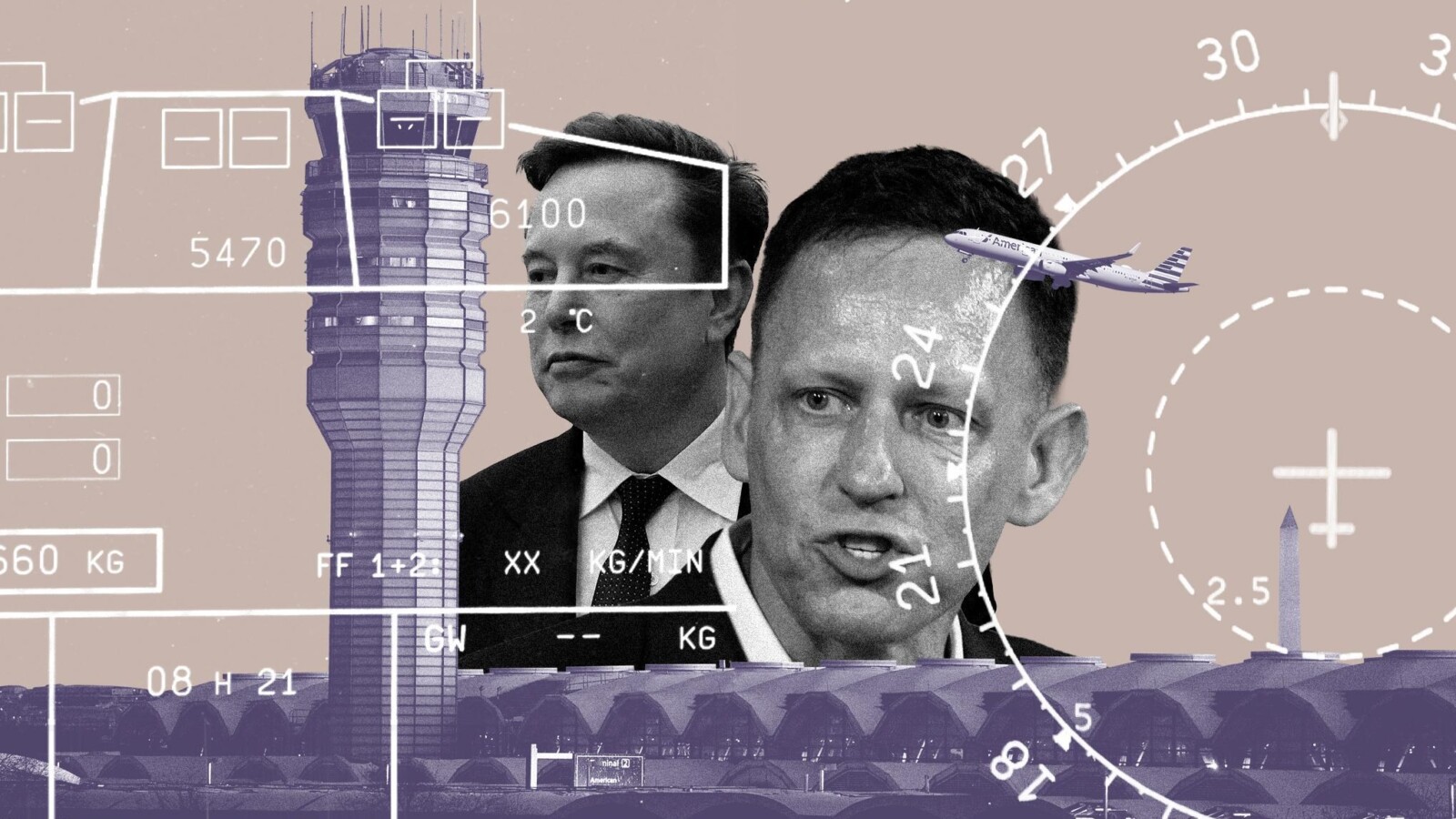
The outages stood in contrast to the administration’s stated ambition to rebuild the national air traffic control system. In February, Transportation Secretary Sean Duffy invited major Trump donor Elon Musk and his Department of Government Efficiency (DOGE) to overhaul the FAA. Musk promised “rapid safety upgrades to the air traffic control system”.
The results fell short of those commitments. DOGE did not help the FAA purchase or implement any major system upgrades. Musk wrongly accused Verizon of running the agency’s communications system, while also failing to establish Starlink as its preferred telecoms provider. The agency’s most notable outcome was the termination of 400 FAA employees, including maintenance technicians across 18 air traffic control centres.
The promised upgrades did not materialise. Recent years have seen equipment failures in Dallas, Denver and Houston, unexplained fumes in Atlanta, Newark and the Potomac air traffic control centre, and chronic staffing shortages in Boston, New York, Los Angeles, Orlando and Philadelphia.
Palantir and the Funding Question
An unstable air traffic control system made 2025 the worst year for flight delays in over a decade. One in four flights was delayed, diverted or cancelled, totalling nearly 1.7 million disruptions. Tarmac delays, where aircraft are held on the ground with passengers required to remain on board, rose 64 percent compared with 2024. An estimated 2.4 million checked bags were lost or damaged on domestic flights alone.
In July 2025, the One Big Beautiful Bill Act authorised roughly £9.9 billion in supplemental funding for a complete overhaul of the FAA’s air traffic control system. Of that total, around £4 billion is dedicated to software upgrades. With DOGE having fallen short of its promises, the administration has invited Peter Thiel, another Republican megadonor, to step in at the FAA. His company, Palantir, is deeply integrated with the agency’s systems, making it a strong contender for many of those contracts, despite no significant prior experience with air traffic control.
Air traffic controllers, several of whom spoke on condition
Source
Image: theverge.com