

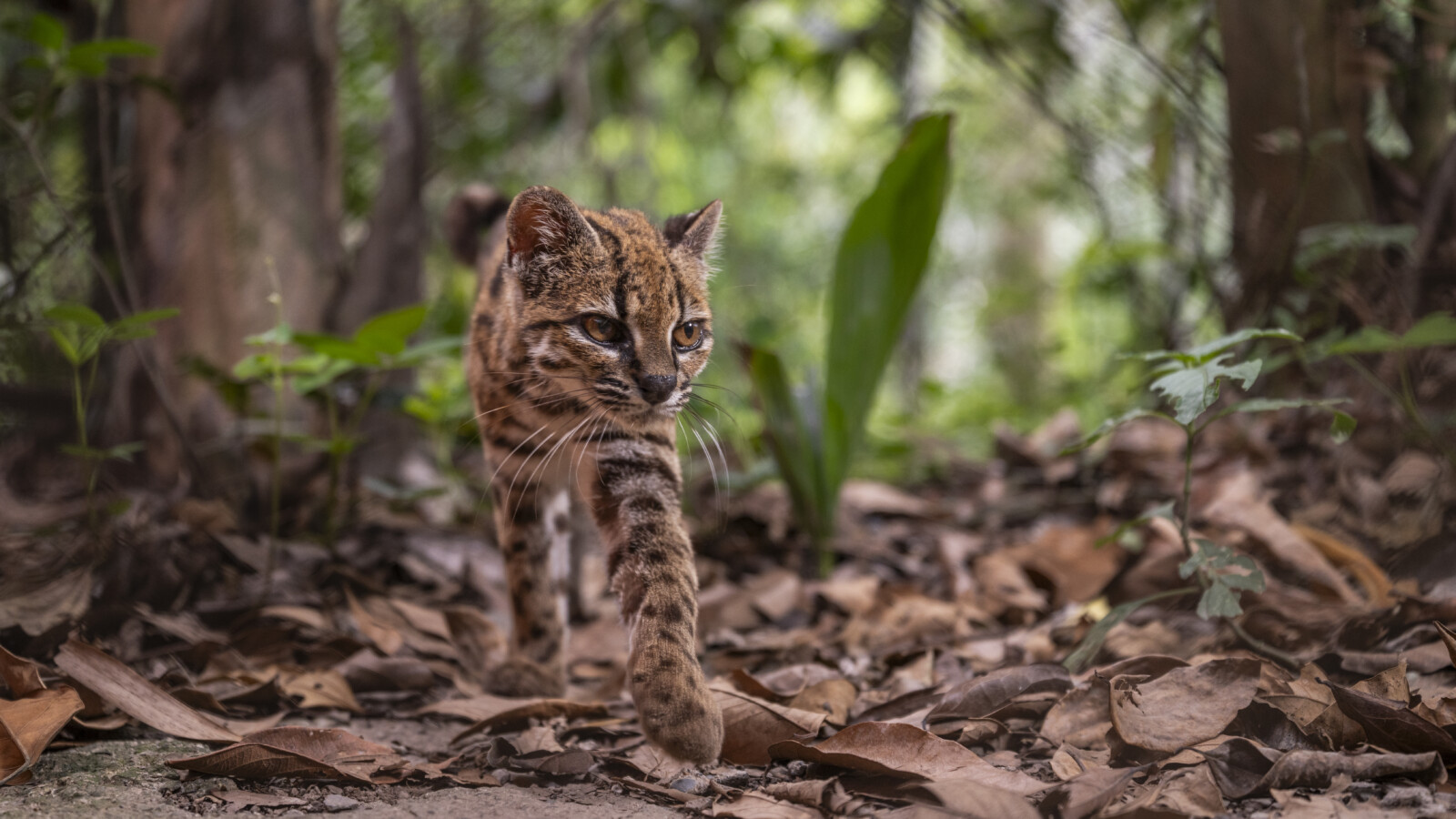
Leopardus tilcayo is the first genetically confirmed new cat species identified in more than 100 years. The small feline hails from the cloud forests of the Bolivian Yungas in South America and belongs to the same genus as familiar American species such as the ocelot and colocolo.
The finding was detailed in a study published in the journal Current Biology. Researchers not only identified the new species but also made fresh discoveries about tiger cats, including the description of a new subspecies. Notably, Leopardus tilcayo is even smaller than the common house cat.
How the species was identified
The discovery emerged from a collaboration between scientist Jonas Lescroart and Paola Nogales-Ascarrunz, head of the Programa de Investigación de Félidos Bolivia conservation programme, alongside other researchers. Nogales-Ascarrunz first spotted the cat at a wildlife rehabilitation centre in the area. She initially thought it was a kitten, before realising it might be an entirely new find. The animal’s spots and long tail did not match any recognised species in the region, prompting her to begin genetic testing on cats brought in by local people.
What makes the tilcayo unusual is that it was not an offshoot of a previously recognised species. Scientists frequently reclassify mammals when a single species splits into two distinct forms, but a wholly new species is a far rarer outcome.
A name rooted in local knowledge
The species retains the name used by native communities who have long known the animal. “This cat, they call it tilcayo. And when you ask, ‘Does it have some meaning in Quechua or [Aymara] and other Indigenous languages?’ they say, ‘No, my grandpa told me that’s the tilcayo,'” Nogales-Ascarrunz said. “This is a traditional knowledge that they have in the community. We want to preserve that knowledge, and we didn’t want to give it another name.”
The size of the wild population remains unknown. “We really don’t know how many cats are still in the wild,” Nogales-Ascarrunz said. “We need science, we need more studies to answer this question, which is actually critical for its conservation.”
The habitat of the tilcayo has long been under threat from surrounding development. Those wishing to support conservation efforts in the Bolivian Yungas can look to organisations such as the Andes Amazon Fund.