
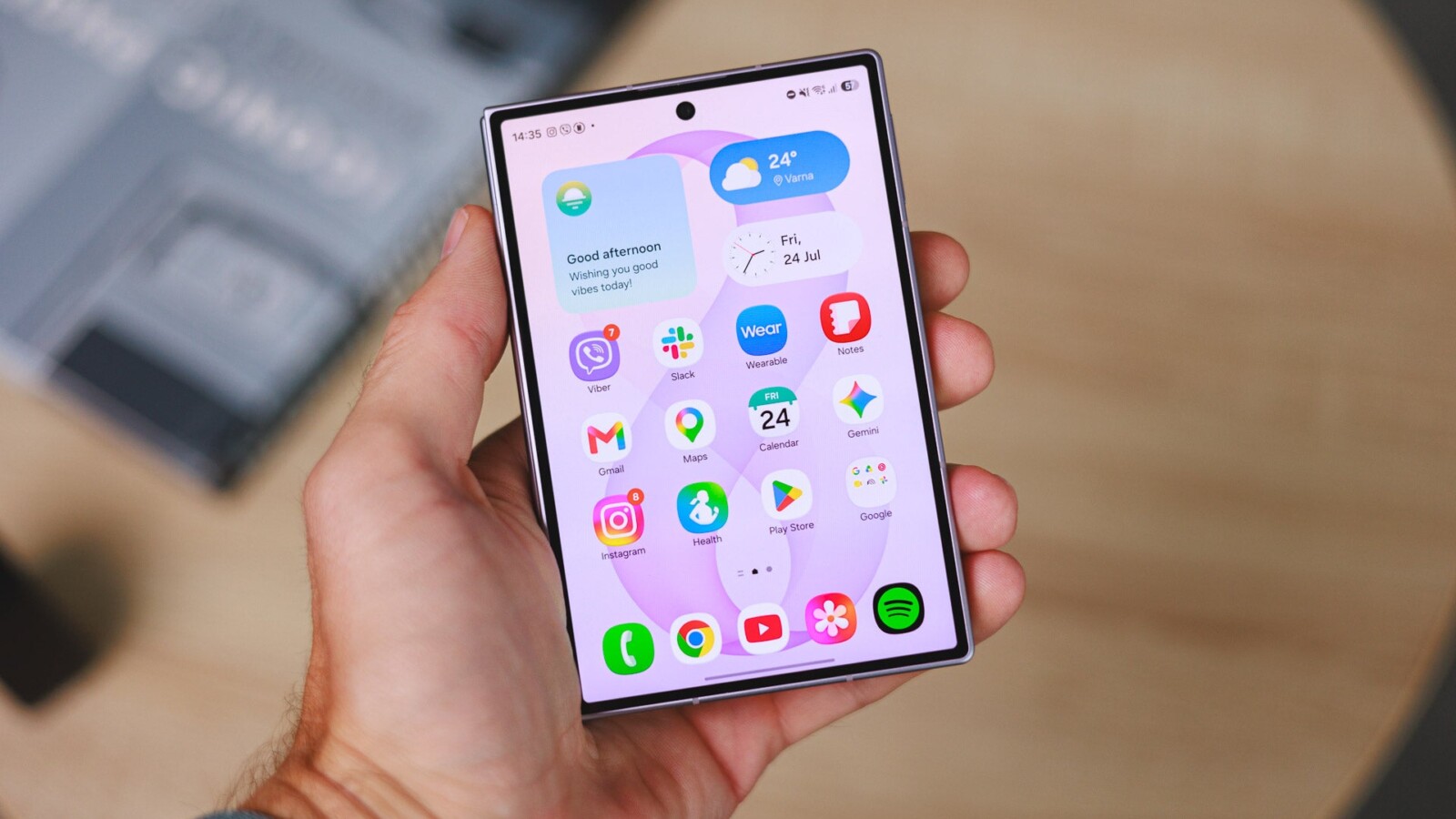
Galaxy Z Fold 8 demand has climbed so sharply that Samsung is now grappling with a display chip shortage, only weeks after the device reached the market. Rather than celebrating the launch, the company is working to resolve production constraints tied to a single, model-specific component.
The chip behind the shortage
Production of the Galaxy Z Fold 8 is being held back by a shortage of the Display Driver IC (DDI), the chip that controls the pixels on the device’s OLED display. Samsung reportedly raised its DDI orders after sales of its passport-style foldable exceeded internal forecasts.
Fulfilling those larger orders is proving difficult, even though the DDI is built on a mature 22 nm process. United Microelectronics Corporation (UMC), the Taiwan-based firm making the chip for Samsung, is said to have reached its capacity limit. Samsung has requested an expedited service known as a “super hot run”, but meeting that request would require UMC to reshuffle production plans for other semiconductors already occupying its 22 nm node.
A key complication is that DDI chips are not interchangeable across models. Unlike memory chips and processors, which can serve multiple products, the DDI specifications for the Z Fold 8 are unique to this device, tying its production directly to available capacity for that specific part.
Managing inventory to keep production moving
To keep pace with unexpectedly strong demand, Samsung is reportedly redirecting DDI inventory that had been secured for future product development toward current manufacturing. With a standard production run for a finished DDI taking roughly four months, the company must manage its stock carefully to avoid further delays.
The Galaxy Z Fold 8 series, which includes the Galaxy Z Fold 8 Ultra, has performed strongly since launch. Early reports indicated pre-orders outpaced even the Galaxy S26 line-up. Within just 12 days, the new foldables were on track to become the most pre-ordered Z series phones ever, running around 30 percent ahead of the previous record-holding Z Fold generation. Much of that momentum came from the passport-style model, which accounted for nearly half of all pre-orders.
Reception of the handset has been broadly positive, though some points have drawn criticism, including cover screen optimisation with certain apps, the speaker arrangement, and cameras that fall short of those on the Z Fold 8 Ultra and the Galaxy S26 Ultra. The new form factor, however, has been well received, with the compact size and design earning praise and the phone being described by some as the best-looking Samsung handset yet.
The DDI chip at the centre of the shortage is manufactured on a 22 nm process, and a normal UMC production run for a completed unit takes approximately four months.
Source
Image: phonearena.com