
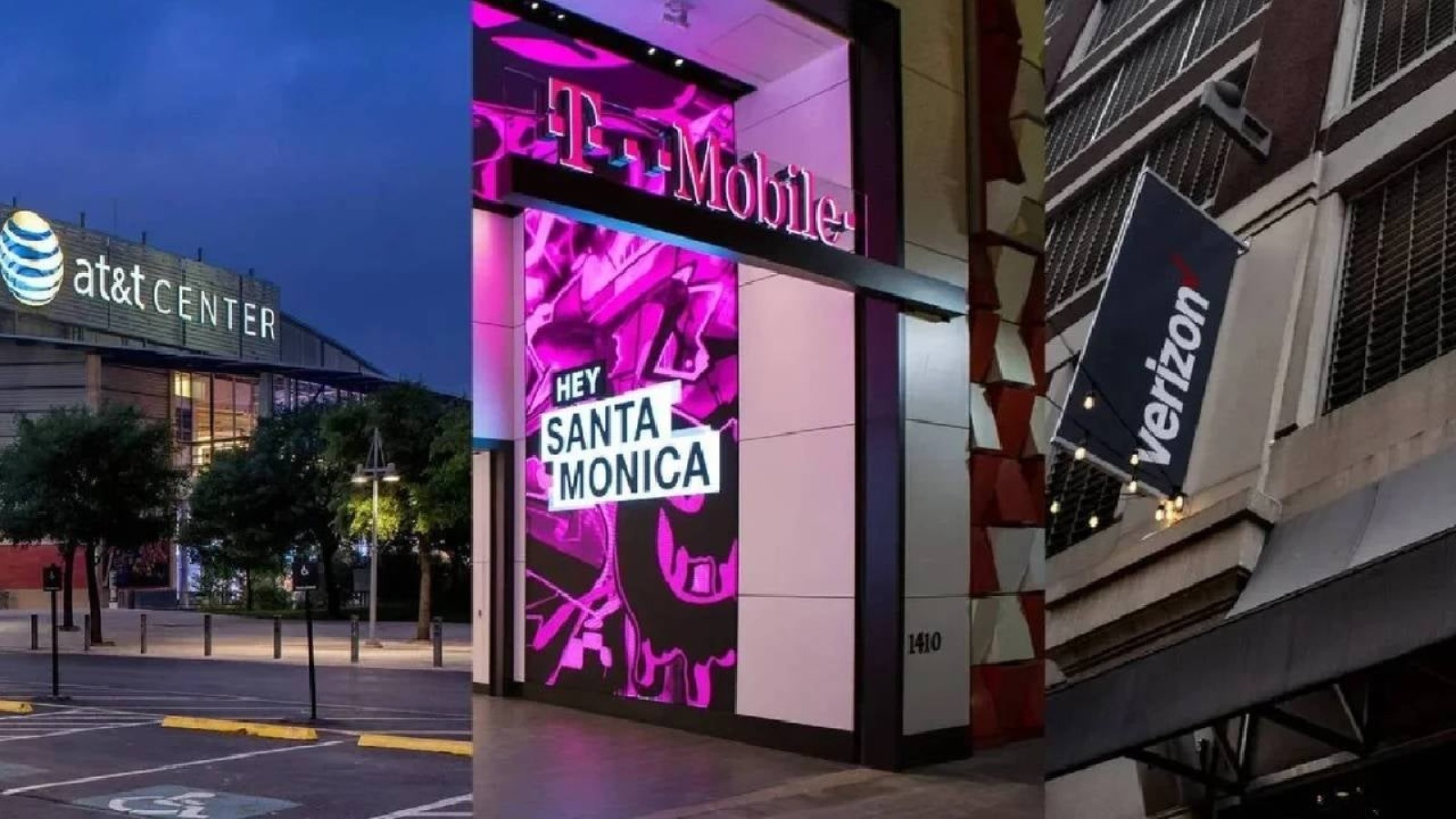
Fixed wireless access continues to expand across the networks operated by AT&T, T-Mobile and Verizon, yet performance figures for the first half of 2026 reveal a clear divide between urban and rural households. The technology delivers a broadband connection using 4G LTE and 5G radio signals, and fresh measurements covering the opening six months of the year show that city dwellers are consistently better served than those in the countryside.
The 5G home internet products from all three carriers now account for 13.74% of the 123.75 million home broadband subscriptions in service.
T-Mobile Leads on Speed
T-Mobile recorded the strongest results, posting a median download speed of 222.7 Mbps in Q2 2026. That figure placed it 38.4% ahead of AT&T Internet Air and 76% ahead of Verizon 5G Home.
AT&T improved considerably after deploying 50 MHz of low-band and mid-band spectrum acquired from EchoStar, which lifted its median download speed by 60% in Q1. Its upload performance also climbed, rising from 9.23 Mbps in Q3 2025 to 12.55 Mbps in Q1. Even so, T-Mobile retained the upload lead with a median of 18.12 Mbps in Q2 2026, ahead of Verizon by 48.5% and AT&T by 80.1%.
Download and upload speeds, along with median multi-server latency, dipped across all three providers in Q2, an outcome attributed to seasonal foliage and higher temperatures.
Time of day also shapes the experience. Speeds peak in the late evening and early morning when usage is light, then fall through the afternoon and early evening as traffic builds. During off-peak periods, the fastest 10% of T-Mobile users can exceed 600 Mbps, while the top 10% of AT&T Internet Air customers can reach 500 Mbps. Verizon applies a cap of around 300 Mbps, so its peak figures do not rise even when congestion eases.
The Urban and Rural Divide
Although fixed wireless was originally promoted as a solution for underserved rural communities, urban areas appear to receive better service. The pattern is not deliberate: short-range but fast 5G mmWave spectrum is easier to deploy in dense urban settings, where homes sit closer to small cells and cell towers.
Urban users across all three networks enjoyed higher download speeds, with the smallest gap recorded by T-Mobile. Latency was also higher in rural locations. T-Mobile and Verizon delivered faster uploads to urban customers, though for AT&T the opposite was true.
Coverage against regulatory benchmarks remains limited. Only Hawaii, New York and the District of Columbia saw more than 40% of users meet the Federal Communications Commission standard of 100 Mbps download and 20 Mbps upload. A further 38 states delivered those speeds to just 30 to 39% of users.
Geography explains much of the disparity. A state such as Hawaii presents few obstacles to positioning antennas optimally, whereas a heavily wooded state such as Maine makes reliable cover
Source
Image: phonearena.com