
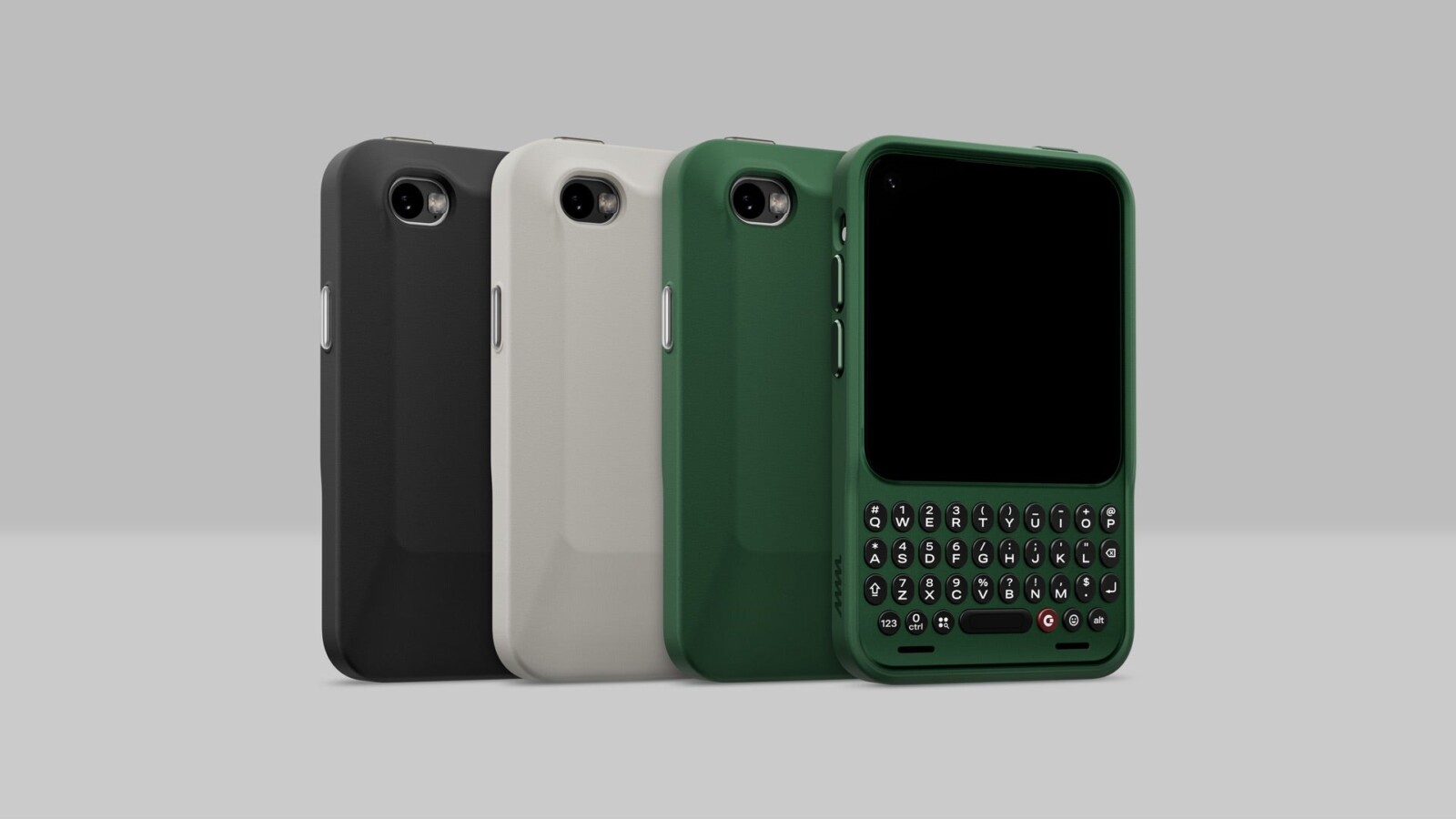
The Clicks Communicator is arriving with more capable hardware at the same price, as reservation holders will now receive 12GB of RAM and a larger battery at no additional cost. The keyboard-equipped handset moves up from the 8GB promised in January, offering better value at a time when several flagship rivals have grown more expensive.
The battery has also been enlarged from 4,000mAh to 4,350mAh and is now rated for more than 800 charge cycles. Both improvements come without any increase for those who have already placed a reservation.
Clicks Communicator jumps to 12GB of RAM before it ships
The Communicator still launches on Android 17, a change confirmed earlier in the year, and is set to receive updates through Android 20 alongside five years of security patches. Order configuration opens now, with the launch price of roughly £390 holding until 30 September. After that, the device moves to its full price of around £510 on 1 October, with shipments beginning in December.
According to Clicks, response to the Communicator has been strong, with many buyers intending to use it as their primary device and nearly half planning to adopt it as a secondary phone focused on communication. The company previously noted that 45% of its pre-order customers already carry an iPhone.
Clicks adds memory as rivals raise prices
Memory prices have risen sharply as AI data centres absorb supply, and both the Galaxy S26 series and the Pixel 11 series launched at around £80 more than their predecessors. Google also reduced the base Pixel 11 Pro from 16GB of RAM to 12GB, while iPhone 18 Pro Max buyers absorbed an increase of roughly £80, with a further rise reportedly planned. A keyboard phone at approximately £390 matching the base Pixel 11 Pro’s 12GB, without charging early buyers more, stands out in 2026.
There is also a change to the battery chemistry. Clicks confirmed that the Communicator now uses a lithium-ion battery instead of the silicon-carbon cell announced in January. Silicon-carbon is the newer, denser chemistry that allows more capacity in the same space, which is why it was originally selected.
Every phone battery must pass independent safety tests in which cells are heated, dropped, punctured and sliced in half, regardless of chemistry. According to Clicks, silicon-carbon cells failed those tests at a noticeably higher rate than lithium-ion, though the overall failure rate remained low. The switch ensures the handset meets safety standards while retaining a substantial battery capacity.
Source
Image: phonearena.com