
Apple Watch Audio Intelligence is a new AI-powered assistive toolset that will run on the latest Apple Watches and on a range of recent iPhone models. Unveiled during Apple’s “Surprise and shine” event, the feature listens to conversations and can transcribe, summarise and recall what was said, positioning wearable audio as a central part of Apple’s assistive strategy.
The announcement arrived alongside a wider repositioning of the iPhone. In his first keynote as Apple chief executive, John Ternus opened not with a product reveal but by describing the iPhone as an “intelligent personal hub”. That framing set up the debut of the foldable iPhone Duo, an iPhone and iPad hybrid, and signalled a future built around AI-infused wearable devices.
How Audio Intelligence works
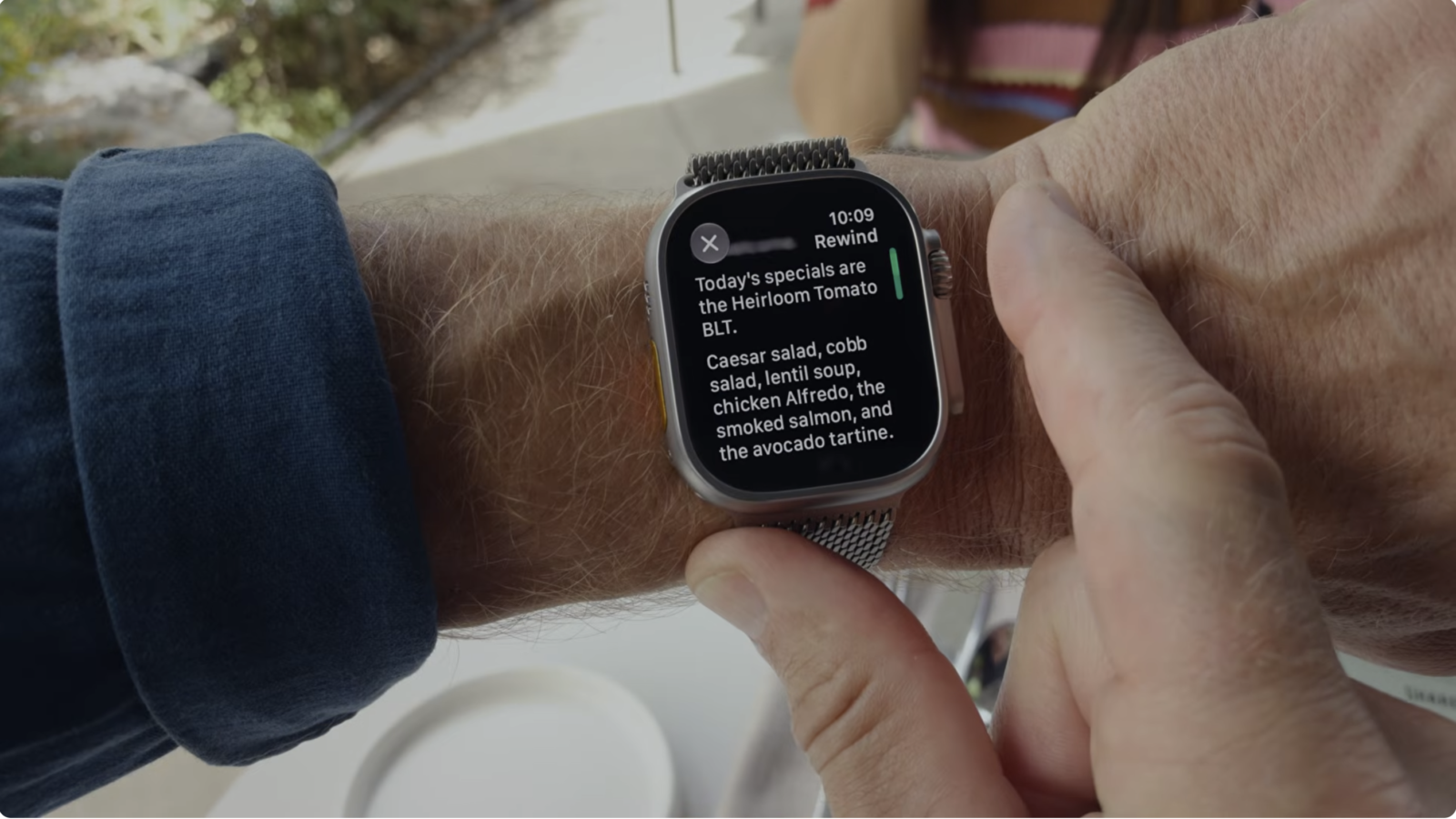
Audio Intelligence listens and, in doing so, can capture and recall spoken information. Live Rewind can check back on things said up to 15 seconds earlier, replaying the last moments of a real-life conversation for anyone who missed what was said. Siri Recap ambiently summarises and transcribes conversations when the feature is switched on, storing recaps of earlier chats for later reference.
The tool is designed to run in the background and record conversations as they happen, producing text transcriptions that can be read on the fly or afterwards, and made searchable within Siri. Apple says Audio Intelligence is encrypted and that no actual audio recordings are saved.
The feature also recognises real-life sounds such as sirens or doorbells, a capability already present within Apple’s existing suite of Apple Watch and AirPods assistive features. Its combination of recap and summary functions effectively turns spoken exchanges into retrievable memories, with audio being simpler to capture than photos or video.
A stepping stone to visual wearables
Audio Intelligence sits alongside Visual Intelligence, a camera-based way to use Siri to analyse, translate or remember things that you see. Visual Intelligence already exists on iPhone, iPad and the Vision Pro. Apple’s eventual next-generation AirPods are expected to include cameras, allowing Visual Intelligence to be used in the real world in a manner similar to how Audio Intelligence operates on the Apple Watch.
The direction echoes AI wearables already on the market, including AI pendants, transcription features on smart glasses and AI-generated conversation summaries. Apple is also expected to introduce its own smart glasses in 2026, extending the same assistive intelligence into a wider range of devices.
Audio Intelligence is available on the latest Apple Watch models and a range of recent iPhone handsets, with the always-listening capability requiring the feature to be turned on before Siri stores recaps of previous conversations.