
Apple Vision Pro continues to attract criticism from commentators who frame Apple’s restraint as failure, while urging the company to mimic the strategies of Meta, OpenAI or Google. Yet the abandoned prototypes behind the headset arguably illustrate a long-standing corporate philosophy rather than mismanagement.
The recurring pattern in much of the analysis is a call for Apple to chase the present rather than anticipate where the market is heading. Apple remains one of the most heavily scrutinised companies in the world, and its approach has consistently confounded analysts. When employees depart or an internal prototype fails to reach production, that decision is often presented as a misstep.
Restraint Framed as Failure
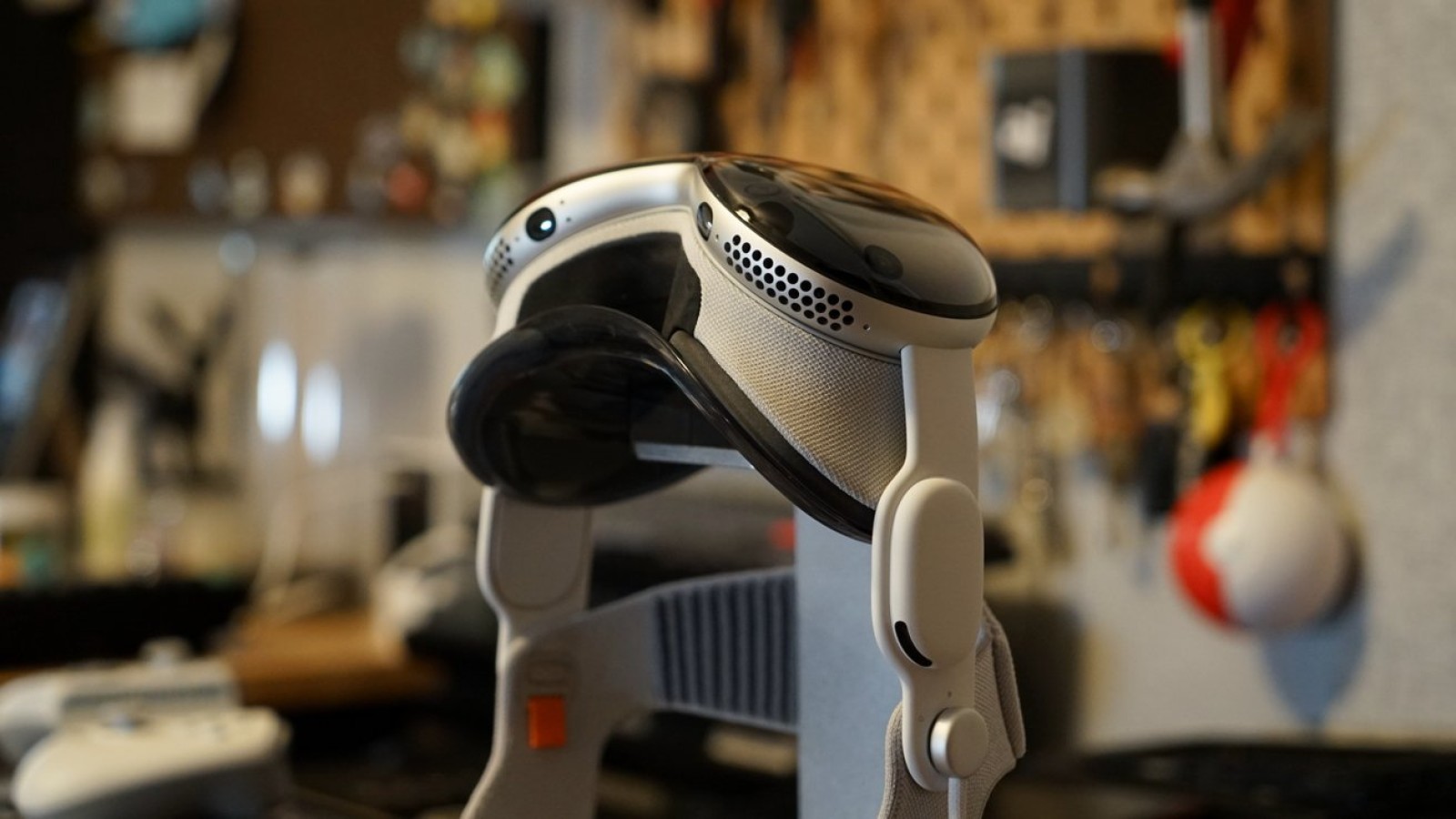
Much of the current attention centres on Meta’s new headset, described as VR glasses that are, by that framing, neither true VR nor glasses. The device weighs roughly one-sixth less and costs about a third of the price of Apple’s headset, but it also offers around half the specification. Apple Vision Pro undeniably has a weight problem, yet the suggestion that Apple is comfortable trading fidelity and scope purely for a lighter design misreads the company’s priorities.
Reporting indicates the extent of research and prototyping Apple undertook in an effort to produce a smaller device sooner. In each case, the company chose to decline. Where a rival said ‘yes’, Apple’s decision to say ‘no’ is being interpreted as a shortcoming rather than a deliberate choice.
The Prototype Graveyard
Apple is understood to maintain a large number of active prototypes, alongside many more that have been shelved. Cancelling a project despite significant sunk cost can be read as a disciplined outcome rather than confusion. Three known abandoned internal projects have nonetheless been cited as evidence of disorder.
The first, N107, offloaded computing to an external product such as a Mac, offering reduced visual fidelity broadly comparable to XReal glasses. The second, N100, was a ‘Vision Air’ concept that moved computing to the battery pack while retaining the closed VR design. The third, N109, was a lighter, lower-cost version built around a less powerful chip.
These are likely three of dozens of concepts explored at Apple Park. Notably, during the 28-month interval between the reveal of the M2 model and the launch of the M5 model, Apple did not fast-track an alternative design and instead continued with its existing hardware.
Meta’s headset offers an example of what a compromised product might resemble, with lower resolution, reduced fidelity and a narrower field of view. The ‘failure’ narrative surrounding Apple Vision Pro assumes a great deal that remains unknown outside the company. No one beyond Apple has full visibility of the internal decisions that shaped the product.
Source
Image: appleinsider.com