

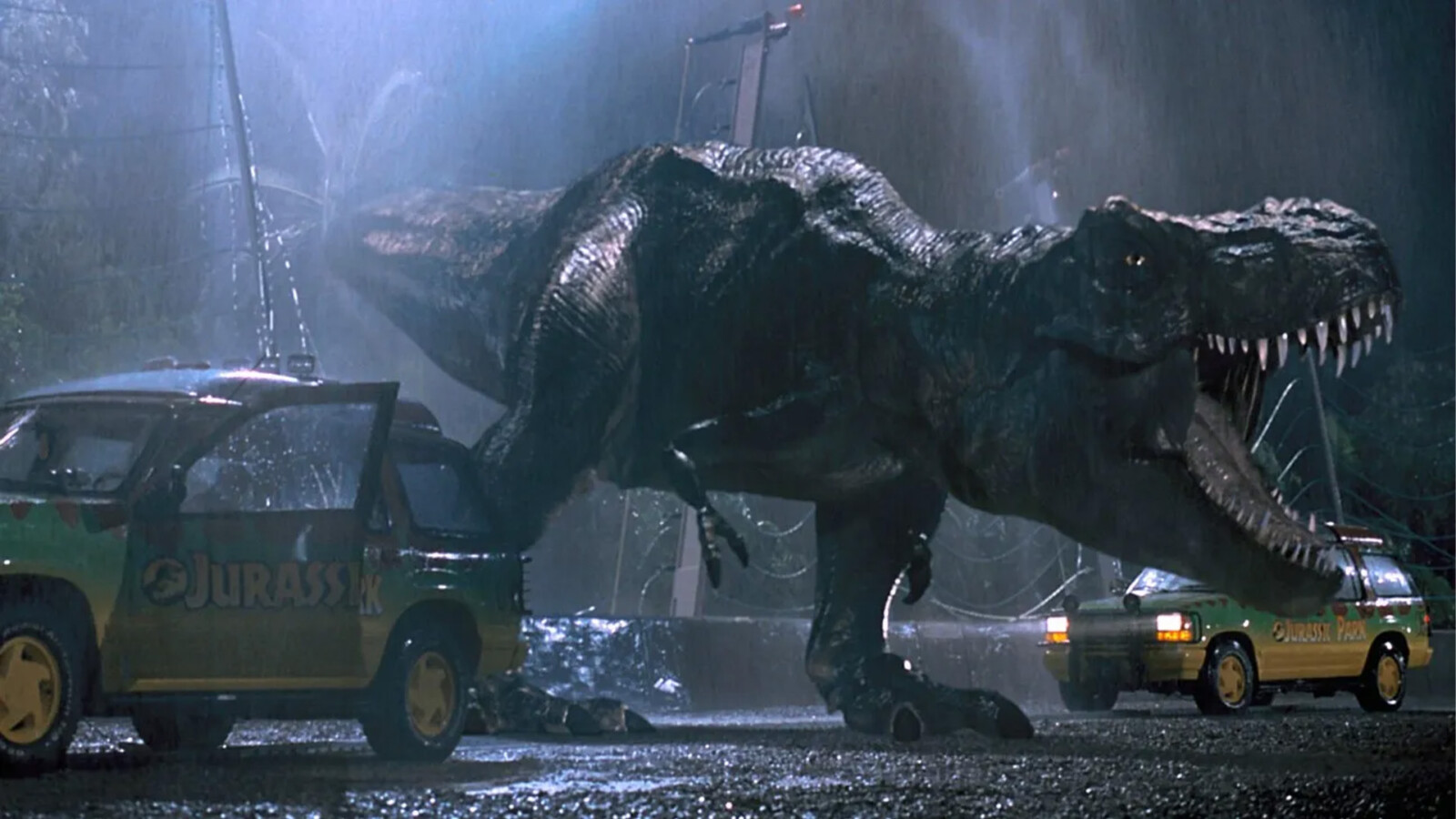
The Tyrannosaurus rex was likely a warm-blooded predator with a body temperature close to that of humans, according to new research from UCLA. The finding challenges the long-held assumption that all dinosaurs were cold-blooded creatures, a belief rooted in their classification as reptiles.
While scientists still do not know the exact body temperatures of most dinosaurs, evidence has been mounting that many were not cold-blooded at all. The latest study, published in Science Advances, was carried out in cooperation with the Natural History Museum of Los Angeles County, which provided teeth from Thomas the T. rex. The specimen, measuring 34 feet tall and dating back 66 million years, was found in Montana in 2003 and is among the most complete examples in the world.
How researchers measured the T. rex’s body temperature
Researchers measured isotopic signatures on the tooth enamel to determine the giant predator’s body temperature. Robert Eagle, co-author of the study and associate professor at UCLA’s Institute of the Environment and Sustainability, explained that information can be drawn from any bone, but teeth are especially useful because tooth enamel has large crystalline structures that are extremely durable. This durability helps them resist chemical alteration after spending eons underground.
Based on this process, the team determined that the T. rex’s body temperature was likely around 36.3 degrees Celsius. That places the dinosaur in the same general category as humans, whose bodies sit at roughly 37 degrees Celsius, as well as Indian and African elephants and large, flightless birds such as ostriches and emus. Eagle described it as the first thermodynamically and relatively direct measure of body temperature for the species.
Why obtaining the teeth was a challenge
UCLA developed the method years ago and previously used it to establish that the megalodon was also a warm-blooded predator. However, the technique destroys the samples it analyses, which led the museum to withhold the teeth until the process could be refined to sacrifice only smaller portions. Aradhna Tripati, climate scientist, co-author of the study and director of the Center for Diverse Leadership in Science, noted that access depended on demonstrating that only a few milligrams were required. She said the instrument and method developed by her lab made the science possible, following more than a decade of work involving senior scientists and technical staff.
The result carries wider implications for understanding dinosaur biology. A 2022 study suggested that, while reptiles are cold-blooded, meat-eating dinosaurs may have had avian metabolisms that made them warm-blooded, whereas plant-eaters such as the Stegosaurus were possibly cold-blooded. Eagle noted that many dinosaurs, though not necessarily all, are thought to have been warm-blooded. Thomas the T. rex, on display at the Natural History Museum of Los Angeles, donated parts of three teeth for the research.