
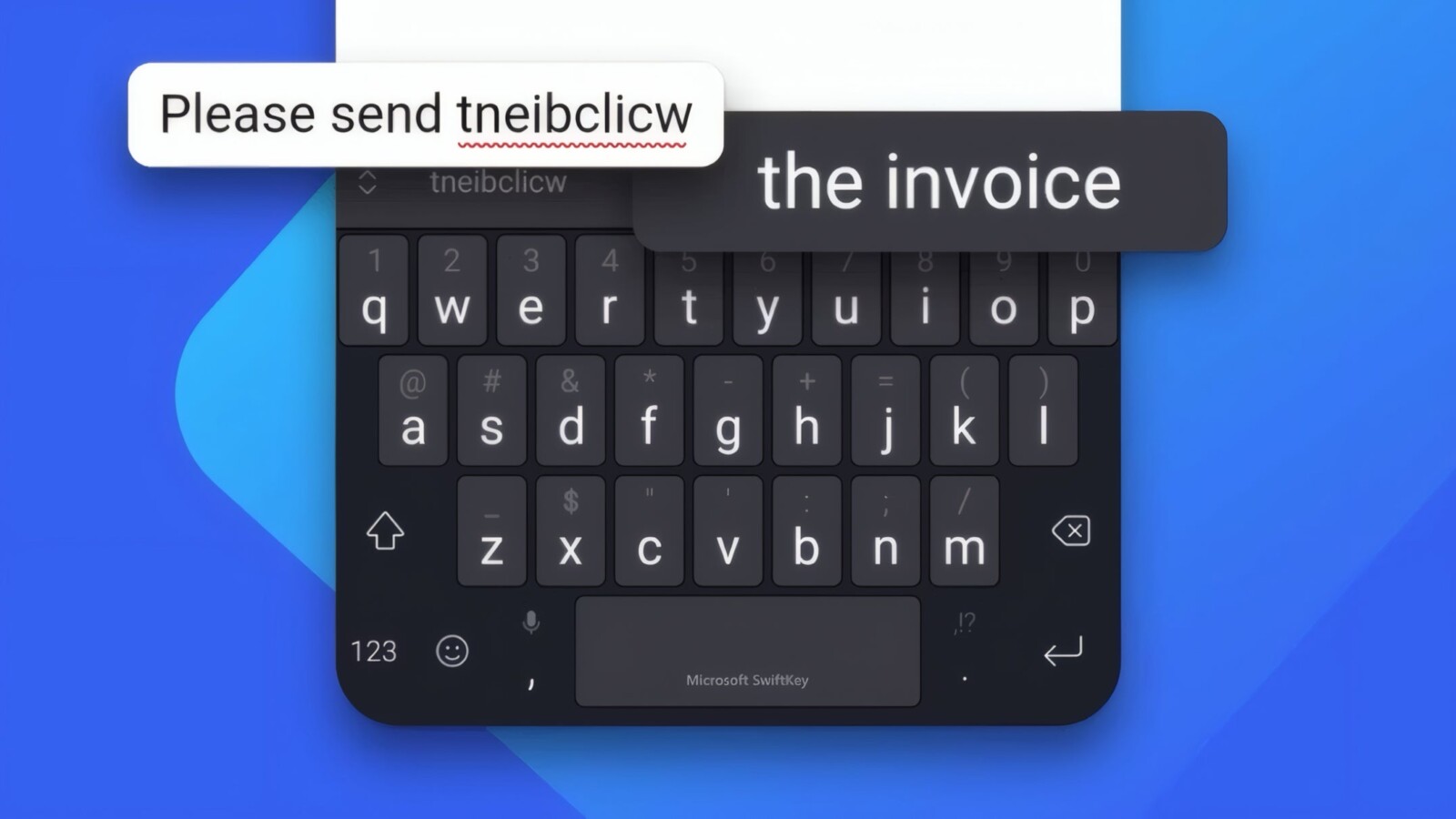
SwiftKey has begun testing an offline AI voice typing mode that mirrors one of the Pixel 11’s standout features, and it does something Google’s own version cannot yet manage: it works entirely without an internet connection.
The feature currently sits in a public beta, which means it arrives with a number of limitations and rough edges. Anyone can install it, but it is not yet ready to replace an established keyboard.
What SwiftKey is testing
The capability appears in SwiftKey beta version 9.13.16.4 for Android as a new “AI voice” option positioned next to the microphone icon. You speak normally, a waveform moves on screen, and once you stop, the app removes filler words and formats the finished text automatically.
An onboarding card notes that you can continue typing on the keys while the microphone is still listening, so the keyboard does not lock up while the feature runs. Testing with both Wi-Fi and mobile data switched off confirmed that the mode still transcribed without difficulty.
How it compares to Rambler
Rambler is the Gboard feature Google introduced with the Pixel 11 series, designed to keep dictated text cohesive even when you backtrack or correct yourself mid-sentence. SwiftKey targets the same problem, but without the exclusivity.
The differences run in both directions. SwiftKey works with no connection at all once its voice model is downloaded, whereas Rambler requires the internet. The SwiftKey beta installs on any Android phone, while Rambler remains limited to the Pixel 11 series for now. Rambler, however, can change tone, format text further and insert emoji by voice, none of which SwiftKey’s version currently does.
Google has led on Android voice typing for years, typically keeping the newest features on Pixel hardware first. A third-party keyboard matching the concept within weeks, and surpassing it on the offline front, indicates how narrow that advantage now is.
The caveats worth knowing
The voice model download came in at 152 MB during setup, so this is not a minor toggle. It is also a beta build, meaning anything in this channel can change or disappear before it reaches the stable app.
Offline dictation is the standout draw, particularly in locations such as a car park or on a plane, where connected voice typing tends to struggle. For anyone weighing a switch, moving to SwiftKey means retraining years of prediction data for a feature that is still missing pieces. The voice model measures 152 MB and the beta runs on any Android phone.
Source
Image: phonearena.com