
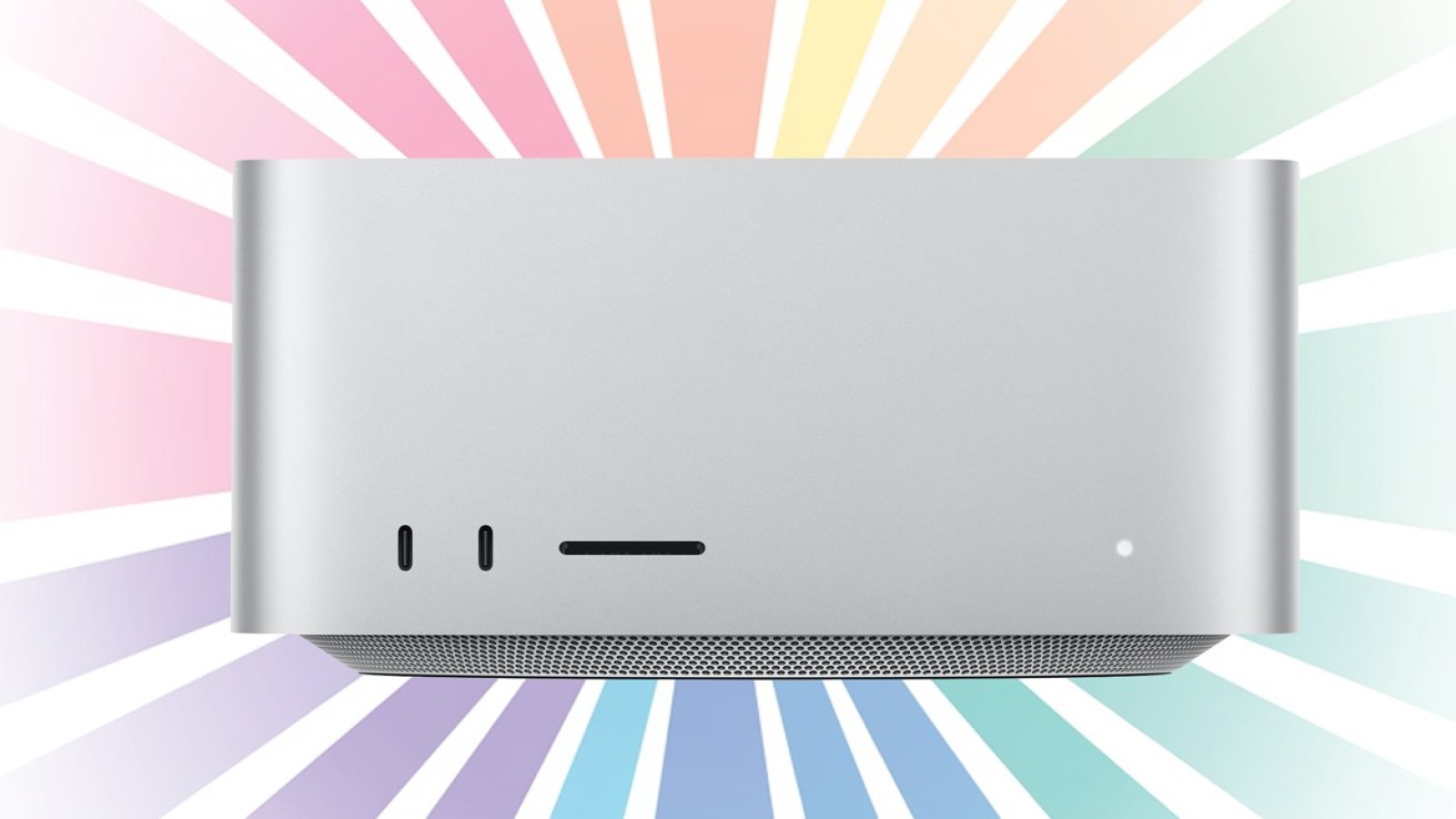
AI-driven demand for the Mac is growing, though not for the reasons some might assume. Rather than becoming the backbone of artificial intelligence infrastructure, Apple’s compact desktops are proving useful to businesses for specific, repetitive computing tasks.
Lead times on both the Mac mini and the Mac Studio have stretched considerably over the past year or so. At present, a fully maxed-out Mac Studio carries a wait of 10 to 12 weeks, alongside a price tag of roughly £14,400 before tax.
Part of the explanation lies in unprecedented supply chain constraints, as storage and memory components become harder to source reliably and affordably. Yet artificial intelligence forms another significant part of the story.
Why AI firms are buying Macs in bulk
Suppliers are reporting increased demand for the Mac mini and Mac Studio, and AI is a genuine factor. However, there is a considerable gap between the notion that AI is driving Mac demand and the claim that the Mac is becoming foundational AI infrastructure.
Apple’s own positioning presents the Mac mini and Mac Studio as well suited to smaller tasks, something akin to an AI-based chore. This has been the case for several months, but the picture changed when large AI operations began buying Apple’s hardware in volume.
OpenAI has purchased tens of thousands of Mac minis and Mac Studios, while Anthropic leases its Mac minis through Amazon Web Services. These bulk purchases have prompted speculation about how the machines are actually being used.
Small, repetitive tasks and reinforcement learning
OpenAI is not chaining Mac minis together to build a supercomputer, and no obvious plans point in that direction. Even so, there is a clear role for Apple hardware within the pipeline.
One of the strengths of the Mac mini, and doubly so for the Mac Studio, is that it offers a great deal of energy-efficient computing power in a small footprint. That makes these machines ideal for hyper-specific use cases requiring considerable repetition.
One such application is reinforcement learning, in which AI learns to perform a task through trial and error, without guidance from a human user. The approach particularly addresses sequential decision-making problems in uncertain environments.
Running this work on a Mac mini or Mac Studio offers several advantages. Power efficiency is one, but the other is that AI will need to learn to interface with macOS regardless, making this a relatively economical way of achieving it.
A fully maxed-out Mac Studio currently costs roughly £14,400 before tax, and configurations can become more expensive still. There are also a handful of instances of companies clustering the machines.
Source
Image: appleinsider.com