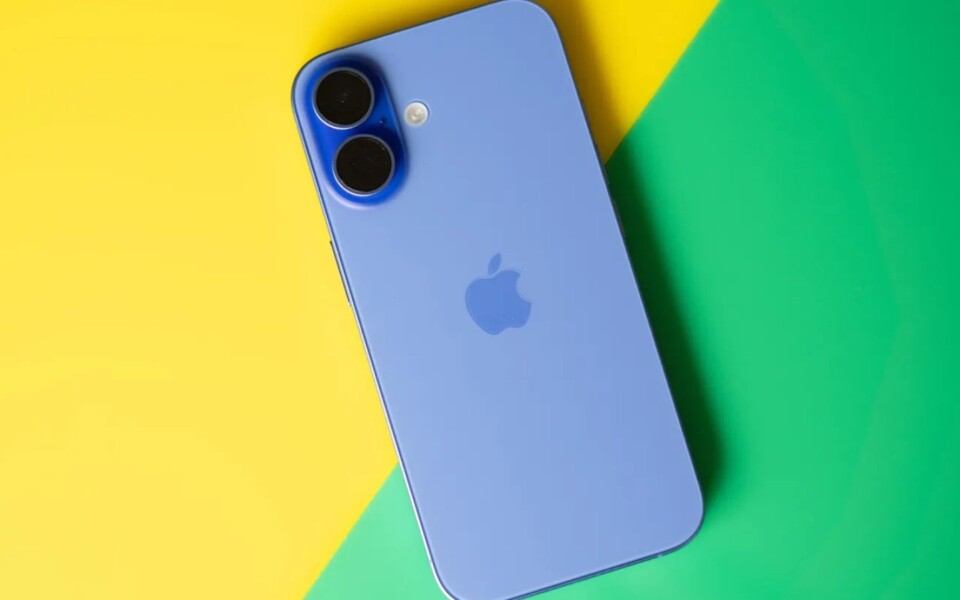

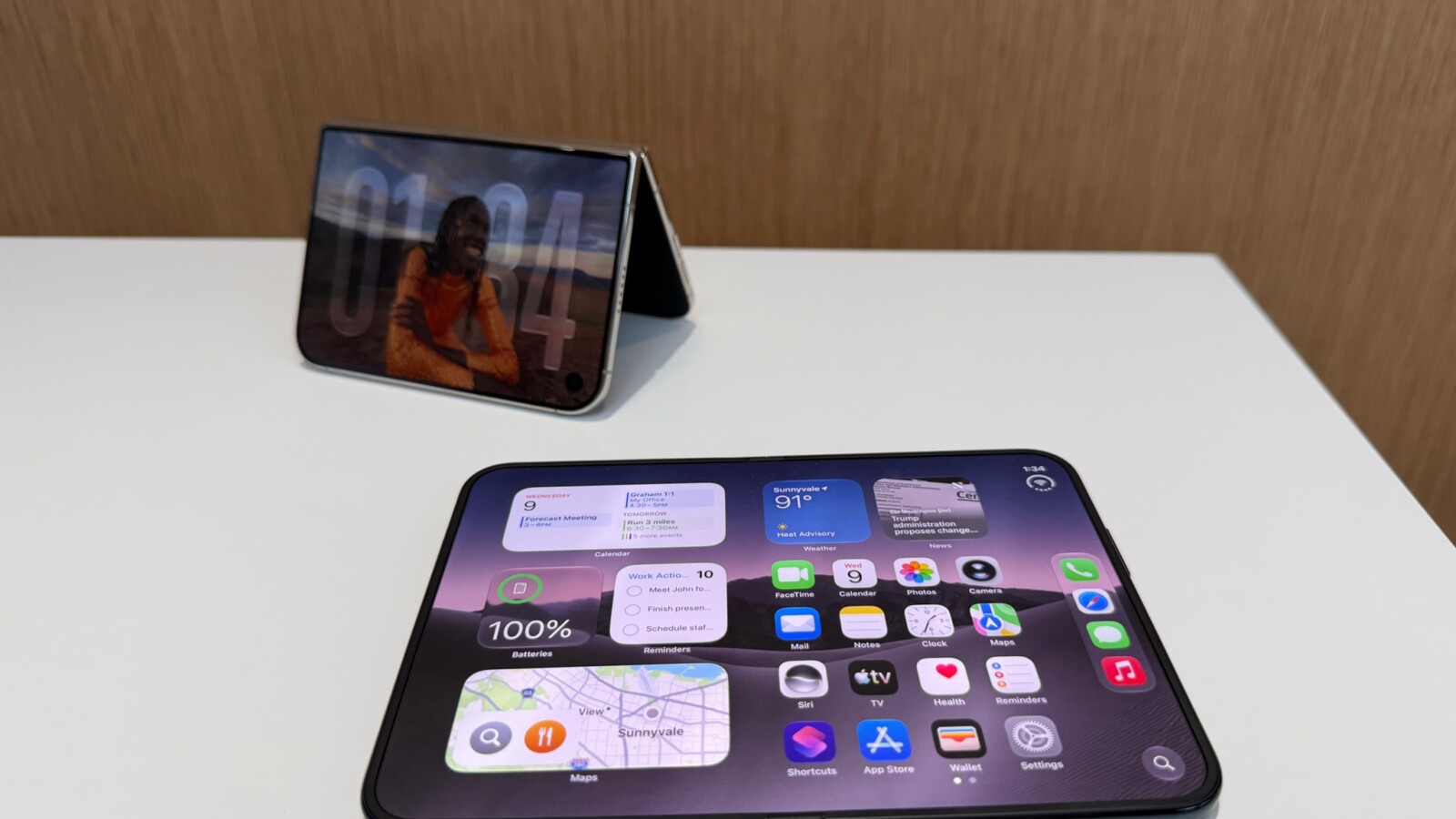
The iPhone Duo marks Apple’s entry into the foldable market, arriving with a name that surprised many who had expected an “iPhone Ultra” branding. Unveiled on Wednesday, the device functions as a compact handset when closed and an iPad-like tablet when unfolded, positioning it directly against Samsung’s most advanced folding phone.
Despite its premium status, the Duo does not carry every top-tier feature found across Apple’s line-up. It omits a telephoto camera and comes with a slightly more modest battery than the iPhone 18 Pro Max. In that sense, it sits closer to Samsung’s palm-size Galaxy Z Fold 8, while the Galaxy Z Fold 8 Ultra pushes further with the manufacturer’s highest-end camera and battery specifications.
Pricing places both firmly at the top of the market. The iPhone Duo starts at roughly £1,499 for 256GB, while the Galaxy Z Fold 8 Ultra begins at around £1,575 for the same storage. Pre-orders for the iPhone Duo open on 16 October ahead of a 23 October release, whereas the Galaxy Z Fold 8 Ultra is already available.
Design and Displays
The clearest distinction between the two lies in their form factors. The iPhone Duo is palm-size, pairing a squat 5.4-inch cover screen with a 7.6-inch inner display. It is designed to be versatile, letting you view horizontal videos in landscape mode and vertical content in portrait.
The Galaxy Z Fold 8 Ultra adopts a more conventional book-style layout, with a taller 6.5-inch cover screen and a larger 8-inch inner display. When closed, its slim profile and standard dimensions make it feel much like a traditional slab phone.
A standout element of the iPhone Duo is its matte, nano-texture inner display, which reduces reflections and softens the crease. The Z Fold 8 Ultra uses an anti-reflective coating to similar effect, though the Duo’s matte finish handles glare more effectively. Both the crease and reflections can still be visible under certain lighting.
The Samsung device is notably thin, measuring 4.1mm when open and 8.9mm when closed. The iPhone Duo is also slender, at 5.2mm open and 11.3mm closed. The Z Fold 8 Ultra is marginally lighter at 215 grams, compared with 254 grams for the Duo, a difference that is barely perceptible in the hand.
Multitasking and Capabilities
Software behaviour further separates the two foldables. The iPhone Duo can run up to two apps simultaneously, while the Z Fold 8 Ultra supports up to three at once. Samsung’s larger main display supports this heavier multitasking, giving each app more room and preventing the interface from feeling cramped.
Both devices target buyers seeking a large-screen experience in a folding form, but they take contrasting approaches: the Duo favours a compact, adaptable shape, while the Z Fold 8 Ultra leans on a taller