
The iPhone Duo marks Apple’s entry into a mature Android foldable market, arriving with a set of hardware features already seen on rival devices, but paired with the kind of software polish that makes many of them feel fresh again. It is those software touches that make the device intriguing ahead of its launch next month, even as questions remain over whether the hardware itself stands apart from the competition.
Had Apple reached the market sooner, the Duo’s squat, wide, passport-inspired shape would have been its biggest surprise. A slow-moving supply chain meant Huawei, Samsung and Xiaomi all brought similarly sized rivals to market first, so the unusual design already feels familiar, a perception reinforced by Samsung’s heavy marketing of its own new shape.
Crease Reduction and Feature Set
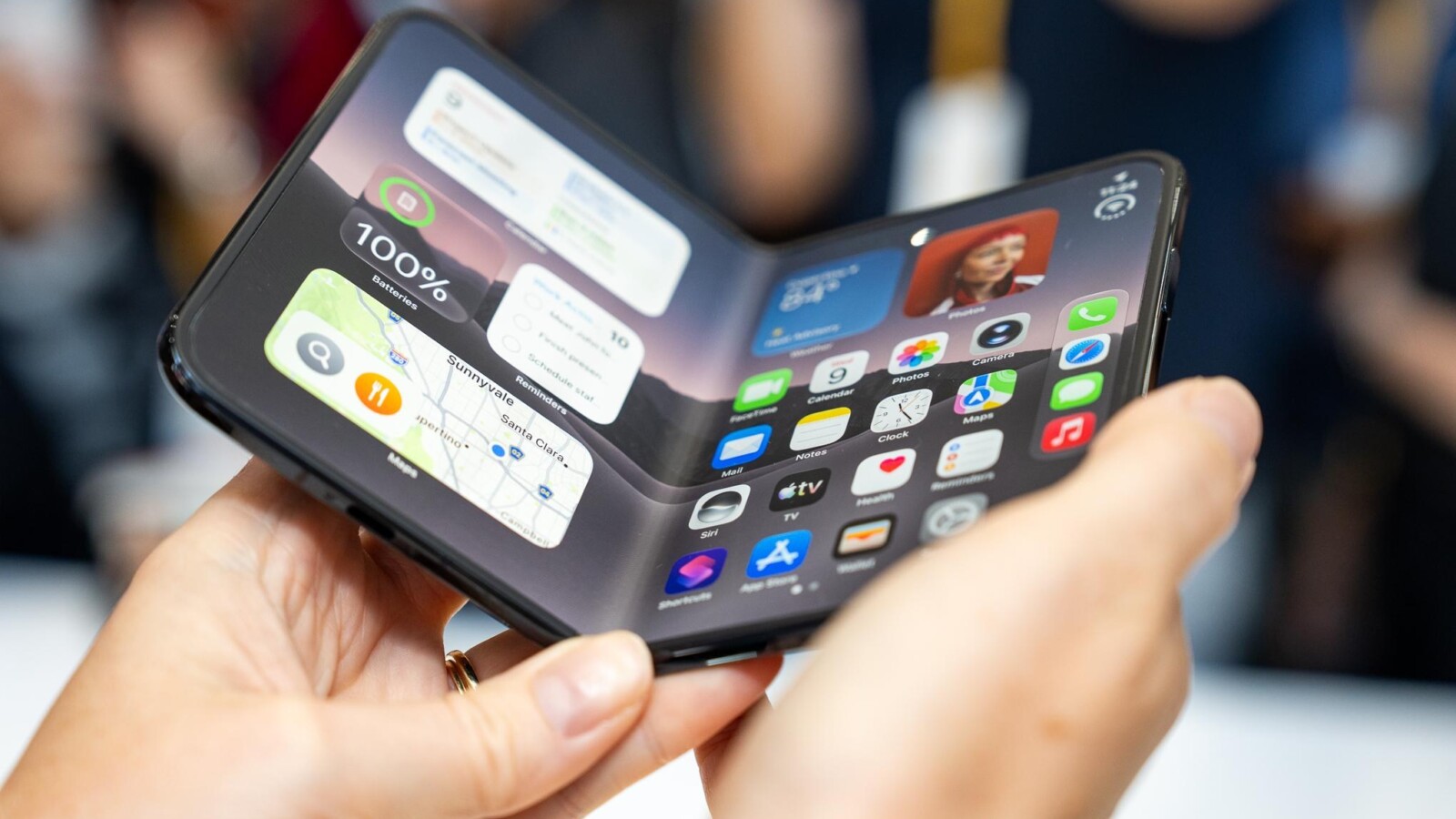
Much attention has focused on Apple’s work to eliminate the foldable display crease, an effort that appears largely successful. Apple credits a 100-component hinge, custom adhesives that allow the display layers to glide over one another, and a matte finish that reduces glare and reflections to make the crease harder to spot. On first inspection, the crease is not really visible, though it can be felt if you go looking for it.
Apple is not the first to tackle the problem. Samsung made significant progress on the crease with the Z Fold 8 and Z Fold 8 Ultra using new titanium display layers, while Oppo all but eliminated its Find N6 crease by using 3D printing to fill the minute gaps across the hinge. A side-by-side comparison would be needed to determine which is subtlest, but any Apple advantage is likely to be narrow.
None of the Duo’s other standout hardware features are firsts either. Google reached an IP68 rating before Apple, a figure now surpassed by Honor’s IP69. Samsung, Oppo and Honor have all offered stylus support previously, though Samsung has since dropped it. Samsung also moved on from the under-display selfie camera, which has long been hampered by poor photo and video quality and a visible patch on the screen.
Thickness and Weight Compared with Rivals
In some respects the hardware feels behind the competition. The Duo is the thickest of this new wave of wide foldables, though at 5.2mm when open it remains thinner than the iPhone Air. Weight is a more obvious concern. At 254g, the Duo is 26 per cent heavier than the Z Fold 8, a difference of 53g that is likely to be noticeable in daily use. You have to go back to 2022’s Z Fold 4 to find a heavier Samsung foldable, the TriFold aside.
The device is set to launch next month, with the software experience positioned as its most distinctive element rather than its physical design.
Source
Image: theverge.com