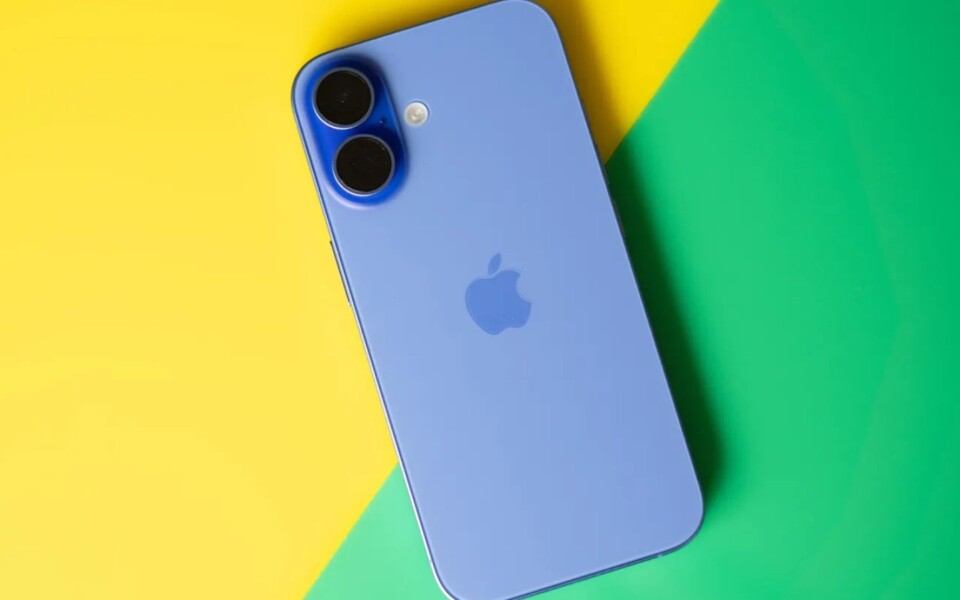

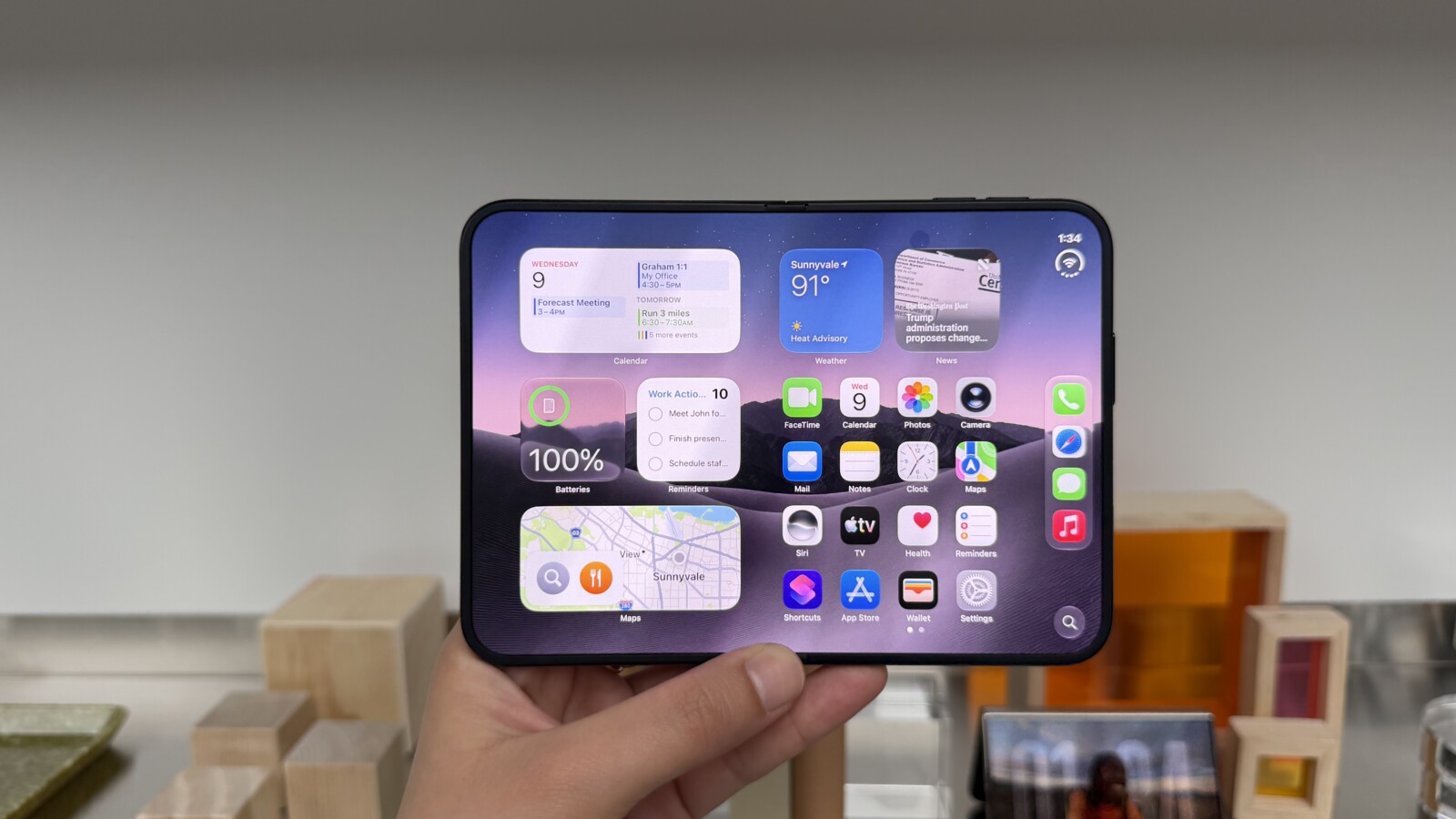
The iPhone Duo is Apple’s first folding phone, unveiled at the company’s “Surprise and shine” event. Described by Apple as “inspired by the versatility of iPad,” the dual-screen, hinged device draws immediate comparisons to the iPad Mini, yet it is not a tablet in the traditional sense.
When unfolded on a table, the iPhone Duo resembles an iPad, and its aspect ratios and design echo the iPad Mini. The device also supports the Apple Pencil and can run certain split-screen apps in a manner that recalls the iPad experience. Pricing starts at around £1,570.
Not quite an iPad
Apple has a long history of expanding and blending its product lines without one device ever fully replacing another. The iPad’s decade-long evolution towards a Mac-like experience, while never becoming a Mac, offers a clear precedent. The iPhone Duo follows a similar pattern: it borrows heavily from the iPad but remains a distinct product.
Crucially, the iPhone Duo does not run iPadOS. Instead, it uses a variant of iOS with what appears to be a different layout, featuring side-oriented menus and docks, repositioned notification indicators, alternative orientations for apps, and an emphasis on continuity between single and dual-screen views when the device is folded and unfolded.
Pencil and accessory support
The Apple Pencil support on the iPhone Duo is limited to the USB-C Pencil, rather than the Pencil 2 or Pencil Pro, which offer advanced pressure sensitivity, hovering input and gyro-enabled brushes. By contrast, the iPad Mini supports the Pencil Pro. Apple did not announce a smaller Pencil designed to connect with the Duo, meaning users would need to carry the USB-C Pencil separately or rely on a future Pencil-enabled case.
Questions also remain over how the device handles keyboard accessories and windowed layouts of the kind that give iPads their workspace capabilities. Pairing a keyboard appears feasible, though the practical experience is not yet clear.
The price positions the iPhone Duo at the premium end of Apple’s range. At roughly £1,570 and up, the folding phone costs the equivalent of several other Apple devices combined, underscoring its position as a high-end product rather than a direct iPad replacement.