
The iPhone 18 was the notable absentee at Apple’s 9 September event, which introduced a refreshed lineup that included new Apple Watches, the iPhone 18 Pro and the company’s first foldable, the iPhone Duo. Apple offered no comment on the missing entry-level model, though reports suggest it will arrive early in 2027, and several factors point to why the firm might hold its baseline handset back until next year.
The gathering carried added significance as the first under new chief executive John Ternus, who began the role on 1 September. It remains to be seen whether he intends to continue the course set by predecessor Tim Cook or steer Apple in a fresh direction. The foldable iPhone Duo marks a bold move into a niche category of phones that sell only a fraction of the volumes achieved by the flat iPhones that generate the bulk of Apple’s quarterly earnings.
Apple has previously expanded its range by slotting products between existing devices. The iPad filled the space between phones and laptops, and the foldable iPhone appears aimed at the gap between smartphone and iPad. Against this backdrop sits a RAM shortage that has pushed memory and component costs higher than ever. The iPhone 18 Pro received a price increase of around £75 over its predecessors, and the current iPhone 17 also became more expensive.
The Commercial Logic Behind the Delay
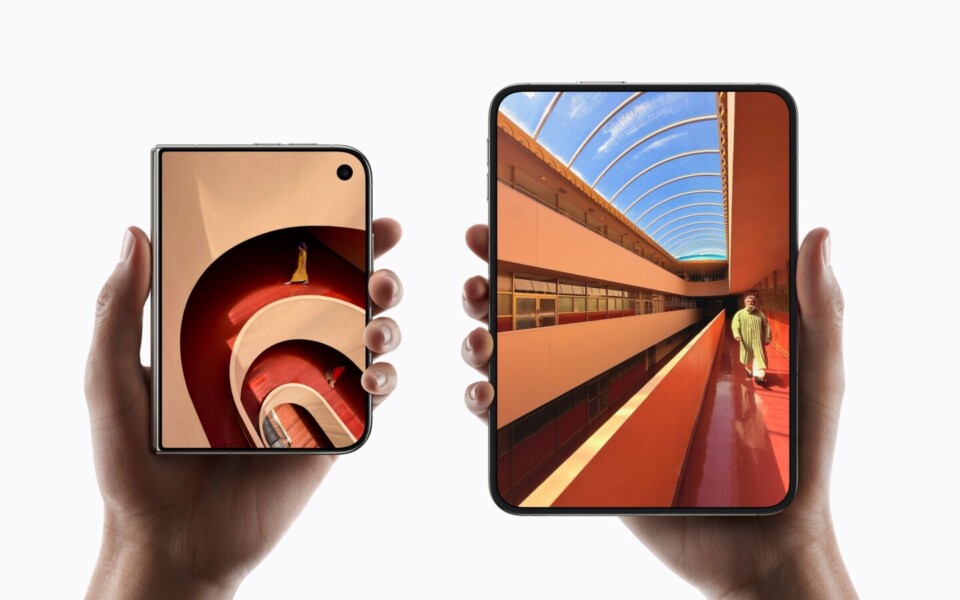
The iPhone Duo, Apple’s first foldable, automatically adjusts its display to suit its orientation. Under current conditions, there are practical reasons to push the more basic phones to next year. The simplest assumption is that it should generate more revenue, with the iPhone 18 Pro priced above the iPhone 18. Anyone keen to upgrade at present has only the pricier models to choose from.
Apple may also wish to space out its models to better match demand, potentially accounting for production complications as parts grow costlier amid the memory shortage. Another possibility is that the company simply wants to keep attention on the folding handset. Nabila Popal, senior research director at the International Data Corporation, described the move as strong strategy, and said it was not driven by the memory situation or supply constraints.
“It allows Apple to spread its shipments more evenly throughout the year and simultaneously allow the spotlight on the premium models this fall — especially the new iPhone foldable,” Popal said.
Releasing the iPhone 18 later need not dampen its sales. Across the first halves of 2024 and 2025, the baseline iPhones launched the previous autumn still accounted for 16% of Apple’s total shipments in those periods, according to Popal.
A Reshaped Lineup for 2026
Alongside delaying the iPhone 18 to 2027, Apple has not followed last year’s iPhone Air with a second-generation model. The original iPhone Air arrived amid an apparent trend towards slim phones, following the Samsung Galaxy S25 Edge earlier in 2025. That trend has faded in 2026, with no high-profile slim handset carrying it forward. Apple’s tagline for the 9 September event was Surprise and Shine.