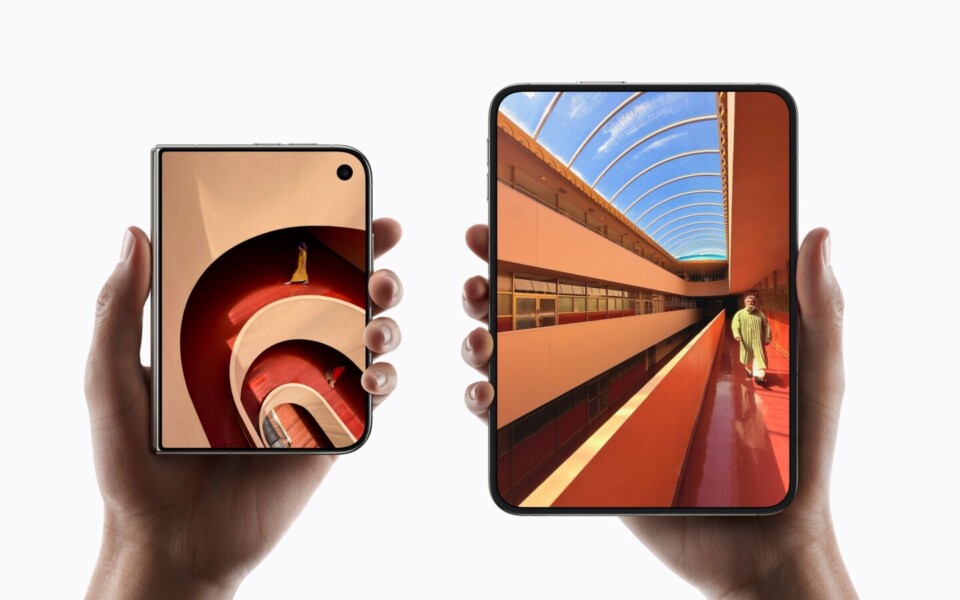

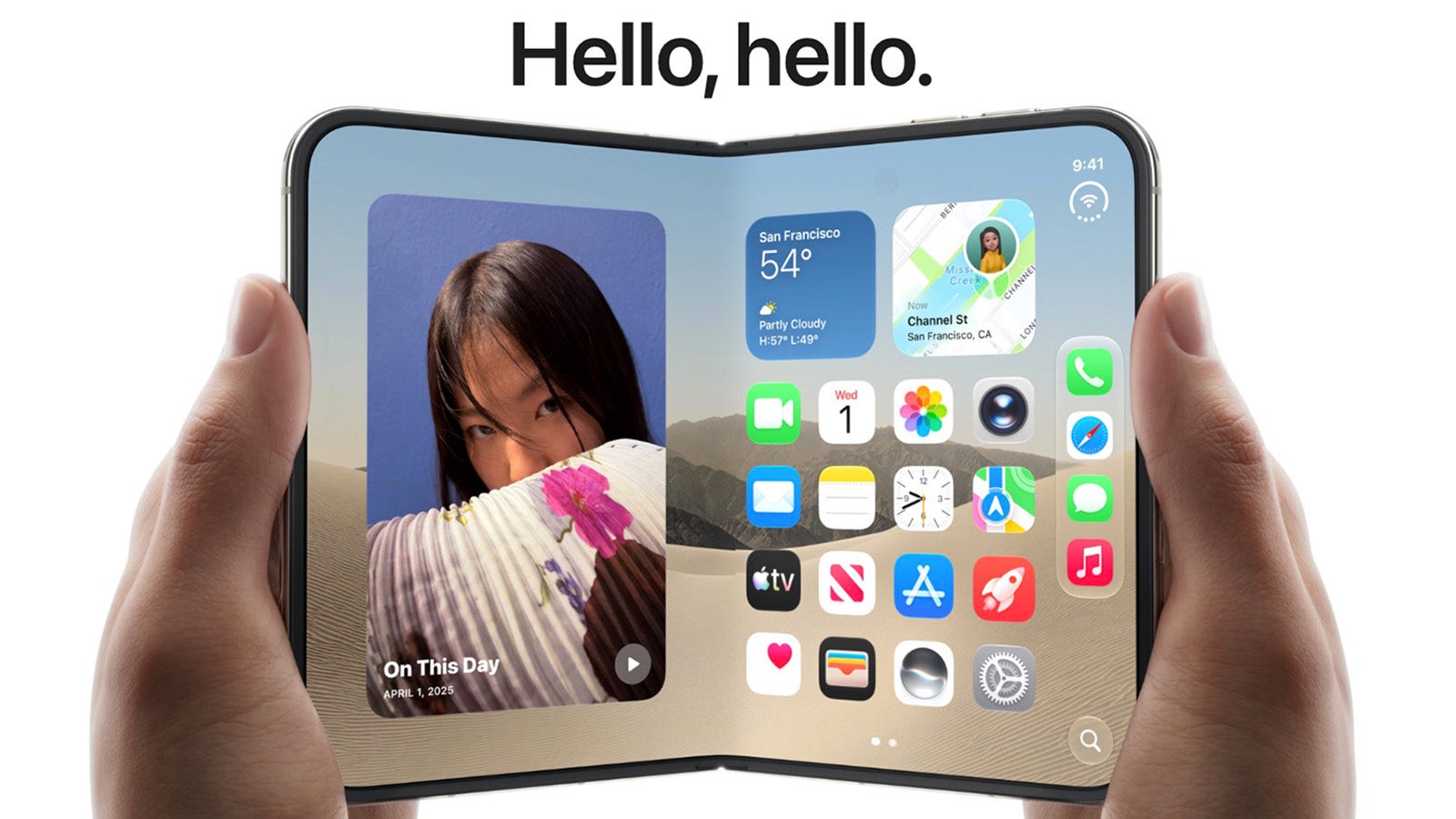
The iPhone Duo marks Apple’s arrival in the foldable market, and it introduces a form factor that departs from established Android designs. Apple’s first foldable iPhone pairs a reworked version of iOS with hardware choices intended to deliver a more tablet-like experience when the device is opened.
A Display Approach That Breaks From Rivals
Both the internal and external screens of the iPhone Duo share the same aspect ratio of 1.4:1, a slightly elongated take on 4:3. This consistency is designed to create a more iPad-like feel when the phone is unfolded, contrasting with the squarer foldable panels that have defined the category so far.
The internal display features a matte coating, a decision that has drawn mixed early reactions. The same matte surface is intended to complement stylus use, as the iPhone Duo supports the Apple Pencil. However, that support is set to arrive later rather than at launch, and the device is compatible only with the basic Apple Pencil USB-C rather than a newer model.
Software Reworked for a Folding Screen
Apple has heavily reworked iOS for the iPhone Duo, with the changes surfacing through iOS 27. The gestures and navigation shown off support one-tap split-screen activation, removing the need for multiple swipes and screen taps to enable multitasking. The app dock and navigation icons shift to the side, and the gesture navigation has been closely optimised for the folding form.
As a first-generation product, the device may arrive with rough edges or features that are not yet fully refined at launch. Apple rarely releases entirely new product categories, which adds to the significance of this release.
Hardware Details and Positioning
The iPhone Duo includes IP68 water and dust resistance from its very first generation, a notable inclusion for a debut foldable. The loudspeakers are positioned to suit the folding design, and the overall form factor sits alongside rival book-style foldables already on the market.
The Apple Pencil support also stands as a point of differentiation from competing devices, some of which have dropped stylus compatibility in order to achieve slimmer profiles. Apple’s foldable enters a segment previously led by Android manufacturers, and its shared-aspect-ratio screens and one-tap multitasking set it apart from the current generation of foldable handsets.
Source
Image: phonearena.com