

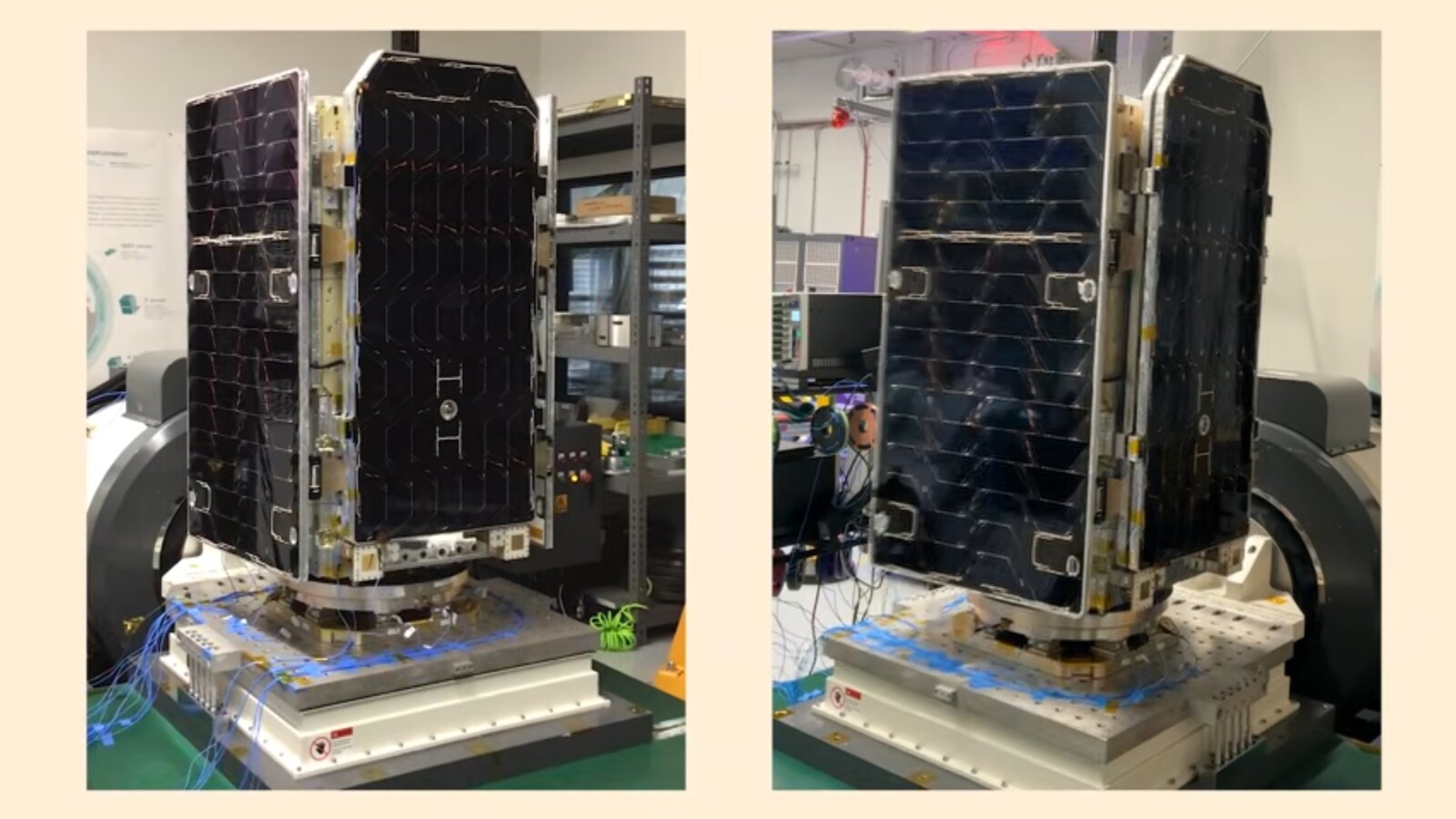
Google is preparing to launch a test satellite aboard a SpaceX Transporter-18 rideshare flight on 1 October, marking an early step towards its ambition of running artificial intelligence workloads in orbit. The satellite forms part of the company’s Project Suncatcher initiative, first announced late last year.
The satellite, named “MWP” and described as roughly the size of a refrigerator, is not a full data centre in space. It will be low-powered, running off solar energy, and designed purely to test the concept of AI computation while orbiting. It will not run large research studies or beam back streaming data. Google is conducting the test in partnership with the satellite imaging company Planet.
Ahead of the mission, Google’s research teams published material showing preparation work, including checks to ensure that TPUs, a type of AI chip, can withstand the vibration of launching into space. The company characterises the test as a small early step in a long-term project exploring whether space could one day host scalable machine learning infrastructure.
Google’s chief executive Sundar Pichai posed the central question in a public post: whether the company’s TPUs can survive and operate in space, adding that the mission would find out. He described the effort as a prototype satellite built in partnership with Planet.
Finding energy for AI in space
One reason Google is pursuing AI computation in orbit relates to energy. Satellites can access up to eight times more solar power than structures on the ground, offering a potentially significant energy resource for space data centres. Such infrastructure could also bypass the backlash facing data centres across the country.
Travis Beals, Google’s senior director for Paradigms of Intelligence, wrote that it could eventually be possible to link together multiple constellations of satellites, allowing them to manage larger AI workloads while in orbit.
Challenges of building data centres in orbit
Achieving this goal may prove difficult. Companies including Google, SpaceX and Nvidia are all seeking to deploy AI technology beyond the Earth’s surface, but face basic physical challenges. Any data centre satellites would need to be built to withstand radiation, extreme temperatures and the physical stress of reaching orbit. They would also need to avoid dangers from an increasingly crowded orbital environment filled with other satellites and debris.
Google intends to continue advancing Project Suncatcher over the next few years, assuming the October test succeeds and progress continues. One of its next milestone goals, set for 2027, would be to begin testing high-bandwidth laser links after launching two more AI satellites with Planet.