

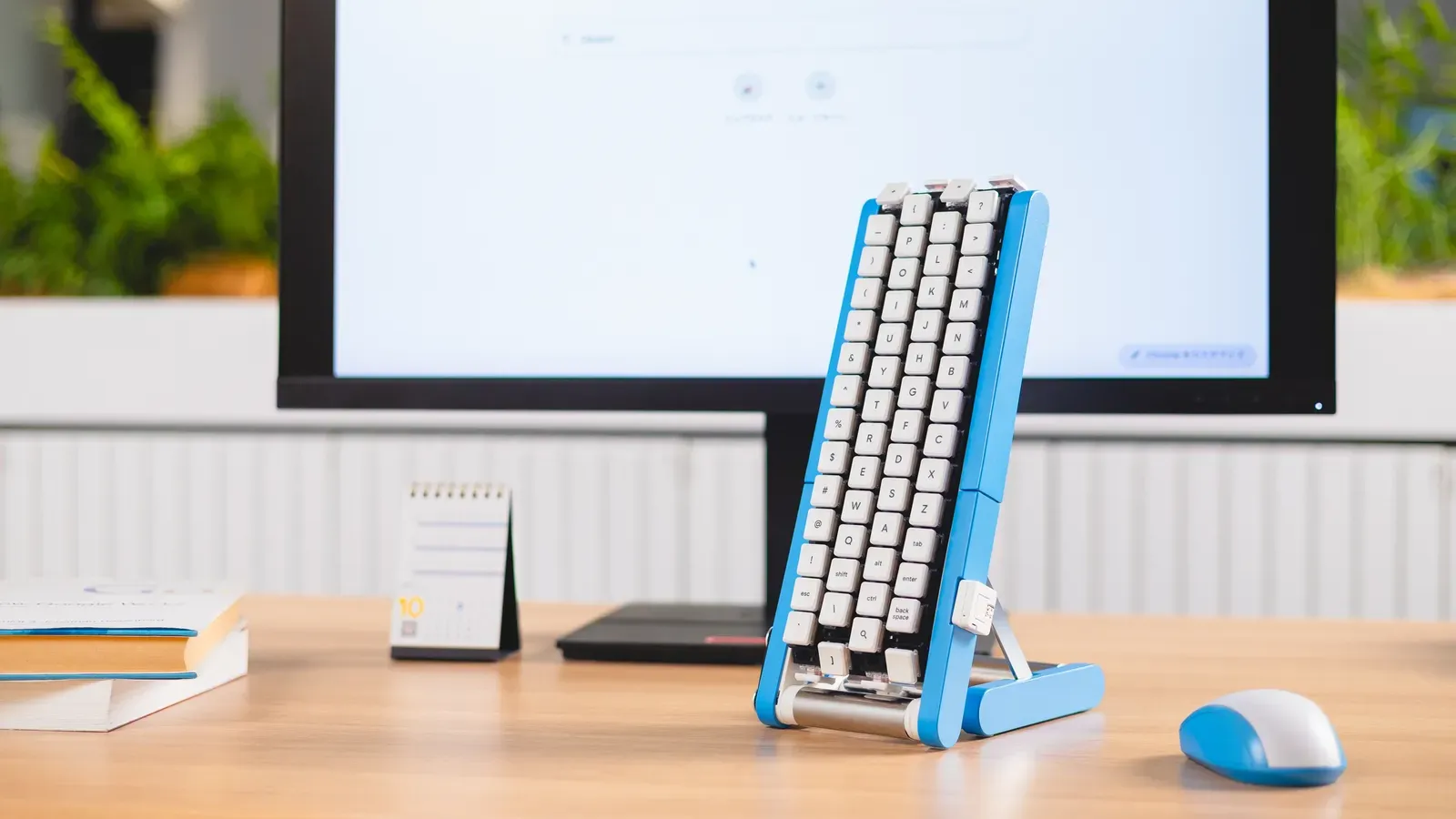
Google Japan has revealed its latest unconventional hardware concept: a physical keyboard that moves its keys like a conveyor belt. Dubbed the Gboard Kuru Kuru, the device was unveiled on 1 October on Google Japan’s official blog, continuing an annual tradition of inventive keyboard designs.
The release date was no accident. 1 October has become the chosen day for showcasing experimental keyboard concepts, as 10/1 serves as a nod to the classic 101-key keyboard layout.
How the Gboard Kuru Kuru works
Rather than requiring users to move their fingers across a standard layout, the Kuru Kuru brings the keys to the typist. The name derives from the Japanese sound word that imitates a spinning motion, reflecting the device’s treadmill-like appearance.
The keyboard features 29 keys that flow in a continuous loop, resembling a waterfall. To type, a user places their index finger in front of the contraption and waits for the desired letter or number to arrive. Google has described the design as a “Copernican revolution” in text input, a reference to the heliocentric model of the solar system.
While the method is far from efficient, it is positioned as a novelty, and users can construct two units to enable a two-handed typing experience.
Build it yourself
Google has no plans to mass-produce the Kuru Kuru keyboard for sale. Instead, the company has published the full blueprint alongside detailed instructions for those wishing to build their own. The project requires a 3D printer for the plastic components, as well as additional parts sourced from a hardware shop.
The Kuru Kuru joins a line of previous experimental concepts from the Japanese branch. Earlier designs include a keyboard built around phone-style rotary dials, evoking landline nostalgia, and a 2024 concept that reimagined the keyboard as a Möbius strip in a donut shape.
Each of these projects reflects Google Japan’s ongoing effort to explore unusual approaches to text input, with the Gboard Kuru Kuru being the newest addition to the collection. The complete set of build instructions and design files is available on the project’s dedicated Japanese page.
Source
Image: phonearena.com