
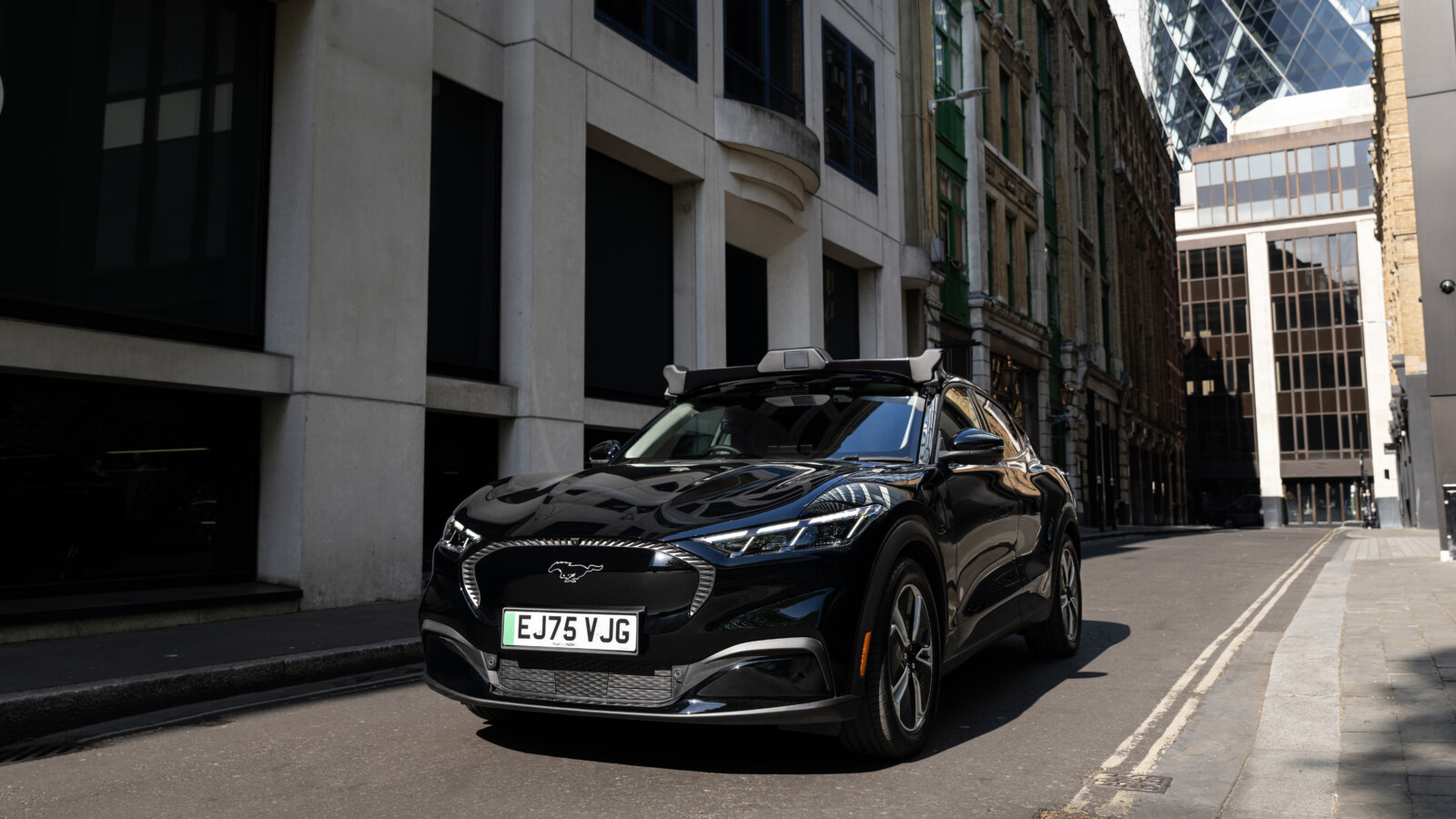
London’s first public robotaxi service is now live. UK riders can hail a self-driving vehicle through the Uber app, thanks to a partnership with autonomous driving company Wayve, although a safety operator will initially remain in the driver’s seat.
At launch, journeys take place aboard the all-electric Ford Mustang Mach-E. The vehicles are fitted with cameras and radar, enabling Wayve’s AI Driver to navigate with full 360-degree visibility around the car at all times, according to the companies.
Over time, rides could expand to other vehicles equipped with Wayve’s driverless technology. Wayve and Uber also plan to open up self-driving trips aboard the Nissan Leaf in Tokyo later this year.
How Wayve’s technology works
Wayve is among a small number of autonomous vehicle companies aiming to reshape urban transportation worldwide. Rivals include Waymo, Zoox, Nuro, Avride and May Mobility, all of which have partnerships with either Lyft, Uber or both. Waymo intends to launch its own robotaxi service in London this year, pending regulatory approval.
Unlike systems that depend on high-definition maps and hand-coded rules for perception and navigation, Wayve says it relies on foundational AI models that allow its AI Driver to learn from real-world environments and apply those driving skills to unexpected scenarios, even without prior training exposure. The company states this means the technology can adapt to new roads, vehicles, weather conditions and cities with considerable speed and efficiency.
The service launch coincides with Uber announcing it is cutting around 10% of its workforce. Chief executive Dara Khosrowshahi described the move as simplifying team structures by removing several management roles. Uber plans to invest more heavily in ride-hailing, delivery and robotaxi operations.
The challenges ahead in London
Wayve was founded in 2017 and began operating on London’s public roads in 2020, around the time Uber abandoned its own self-driving ambitions in favour of teaming up with more established players.
In 2024, Uber and Wayve announced their collaboration, agreeing to bring Wayve-powered vehicles to the Uber network. That was followed the next year by plans to launch self-driving trials on public streets in London.
As driverless cars expand into more cities, they encounter distinct challenges shaped by local cultures, roads and regulations. London may prove especially demanding, given its narrow, one-way routes and assertive pedestrians. The city’s iconic black-cab culture has endured even as ride-hailing apps transformed how people travel, and autonomous vehicles could now trigger another significant shift in the city’s transportation landscape.