
The Picard manoeuvre from Star Trek: The Next Generation has become an unlikely teaching tool for the theory of relativity, after a physicist worked through the maths behind the famous warp-speed trick and discovered a detail the show’s writers had missed. Far from exposing a plot hole, the finding makes the manoeuvre appear even more impressive than intended.
Níckolas de Aguiar Alves, a physicist at the Federal University of ABC in Brazil, first watched the series as a master’s student. When he reached the first-season episode “The Battle”, the plot reminded him of his coursework on relativity. In the episode, a Ferengi leader recalls a past encounter in which Picard commanded a ship called the Stargazer. With its shields down and under fire, the Stargazer needed to close in without being hit.
How the Picard manoeuvre works
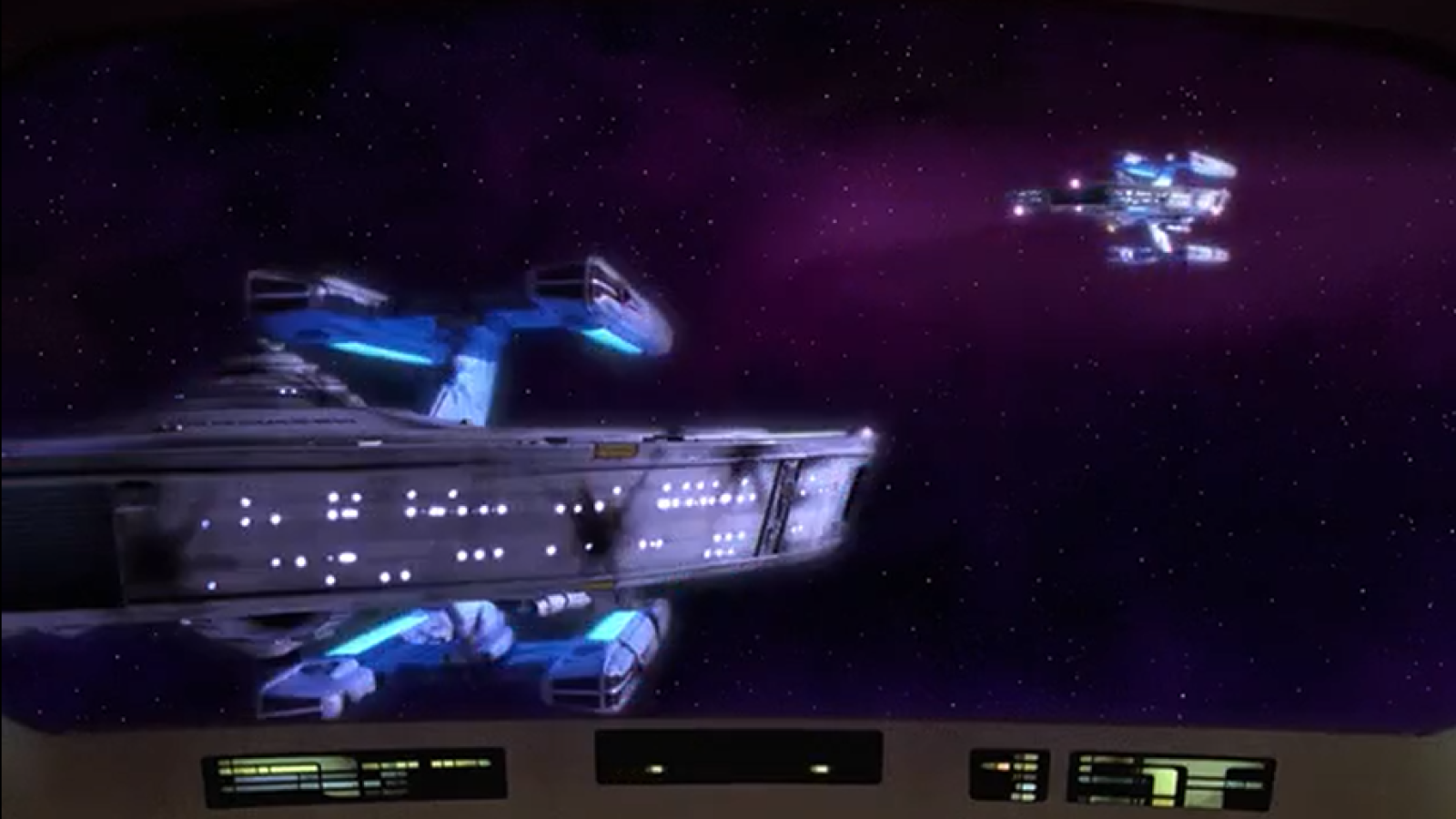
Picard ordered the Stargazer to charge the enemy vessel at warp speed, meaning faster than light, then to stop abruptly and fire. Because the ship travelled faster than light, Picard anticipated that the attacker would see two images of the Stargazer: one where it entered warp and one where it halted. If the enemy fired on the wrong image, they would miss, allowing Picard to prevail. Later in the episode, Riker notes that the tactic had been recorded in Starfleet textbooks as the “Picard manoeuvre”.
While warp speed remains science fiction, the underlying idea is not far removed from real physics. Physicists sometimes need to consider what happens when an object moves faster than light, and such an object really would leave two images. The concept arises from the way a faster-than-light spaceship would outrun its own light, producing two images that correspond to two different times when light from the ship could reach an observer at rest.
Three images, not two
Something about the scenario had bothered de Aguiar Alves at the time, but he set it aside until years later. While working through a more practical problem involving particles in a medium with a slower speed of light, he began drawing diagrams to check his calculations and realised he had considered a similar situation before.
The key detail is that Picard’s ship does not travel at a constant speed. It accelerates to warp, then stops close to the enemy vessel, meaning the Stargazer accelerates twice. That double acceleration changes the timing. After mapping out the geometry, de Aguiar Alves found that the enemy ship would actually see three images of the Stargazer, not two.
His diagrams show what would be visible from the Ferengi vessel at different points in time, with as many as three images of the Stargazer appearing simultaneously at certain moments. Adding a further burst of warp speed could boost the number of visible images to five.
Source
Image: arstechnica.com