
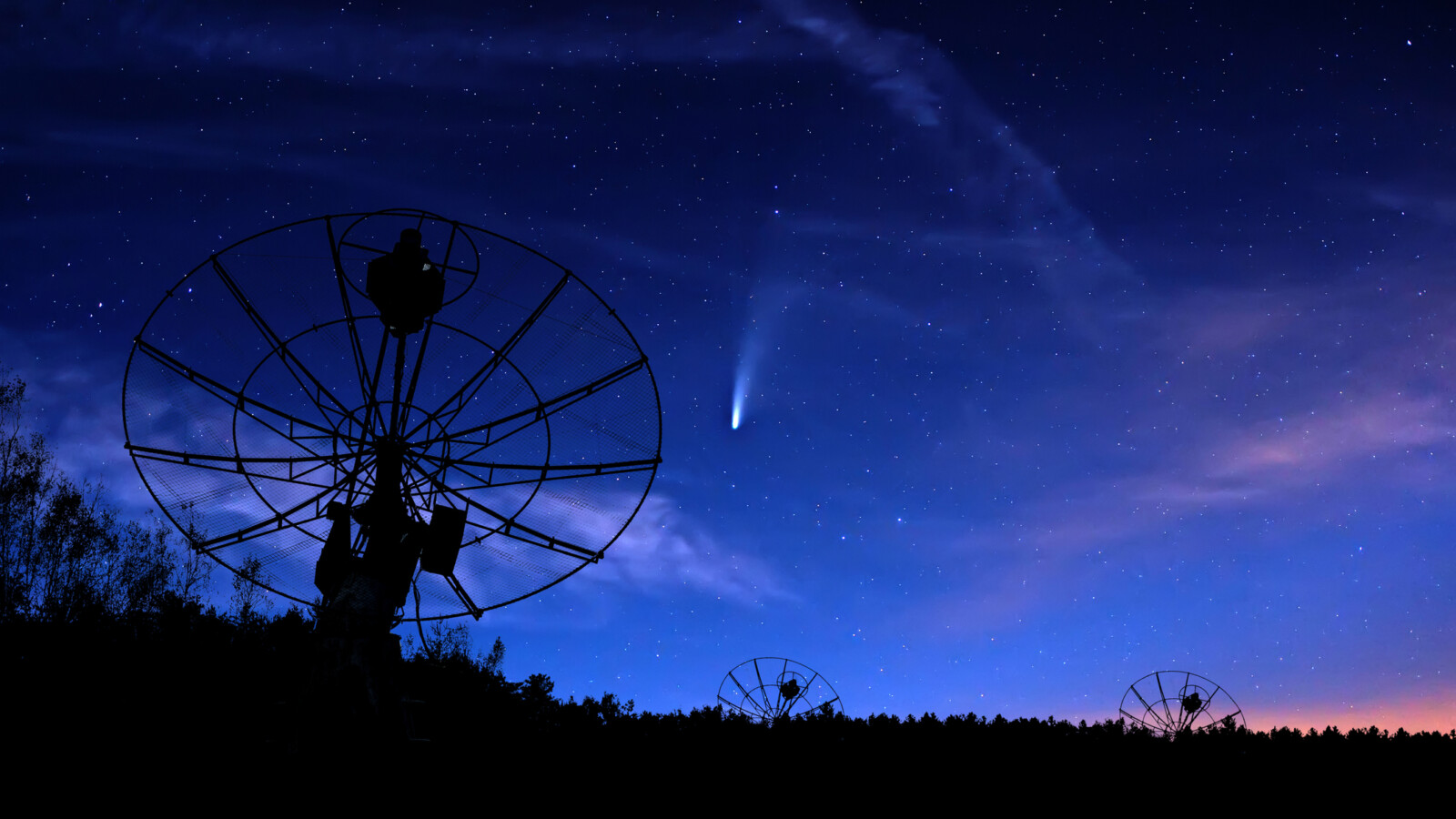
The growing challenge of space debris has prompted the development of portable tracking technology, with LeoLabs deploying a new space radar in the Maui hills. The system, known as Scout-S, is designed to monitor objects orbiting Earth as low Earth orbit becomes increasingly congested.
Scout-S is roughly the size of a 20-foot shipping container and can be transported and set up anywhere in the world within a couple of hours. While it can connect to an electrical grid and fibre internet, its defining feature is portability. Deployed off-grid, it requires only a generator and a Starlink dish to relay the radar’s data back to a computer.
A rapidly crowding orbit
The scale of the problem has expanded dramatically in recent years. The Soviet Union launched the world’s first satellite in 1957, and it took another 53 years for the total to pass 1,000. When Starlink launched its first satellite in 2019, there were still only around 2,000 satellites orbiting Earth. Today the figure stands at 16,810, and nearly two out of every three belong to Starlink.
Each satellite travels at around 17,000 mph. A collision between two of them could range from highly troubling to catastrophic. In a worst-case scenario, satellites colliding with each other or with a piece of debris could trigger a feedback loop known as Kessler syndrome, in which one collision creates thousands of new fragments that cause further collisions. This could ultimately fill low Earth orbit, the region roughly 342 miles overhead where Starlink beams down fast, low-latency internet, with so much debris that it becomes unusable.
Divided scientific opinion
Concern over this outcome varies across the scientific community. Lorenzo Olivieri, a professor at the University of Padova, presented a paper on space debris populations from break-up events at the Advanced Maui Optical and Space Surveillance Technologies Conference.
“We worry a lot about it because we have seen that in the last few years, the number of spacecraft has increased exponentially, and we are not stopping it,” Olivieri said. He added that “the worrisome idea of the Kessler syndrome could be a real close future.”
Responses among scientists at the conference ranged widely. Some argued that a Kessler-type scenario is only a matter of time if current trends continue, while others dismissed it as the stuff of science fiction. Even setting aside the most pessimistic views, crowded orbits are being taken seriously across the sector. Satellite operators seeking to avoid collisions, along with the US military deploying space-based systems, all want a clearer picture of activity overhead. This field is referred to as space situational awareness.
Scout-S forms part of that effort, offering a transportable means of tracking objects across low Earth orbit as the number of satellites continues to rise.