

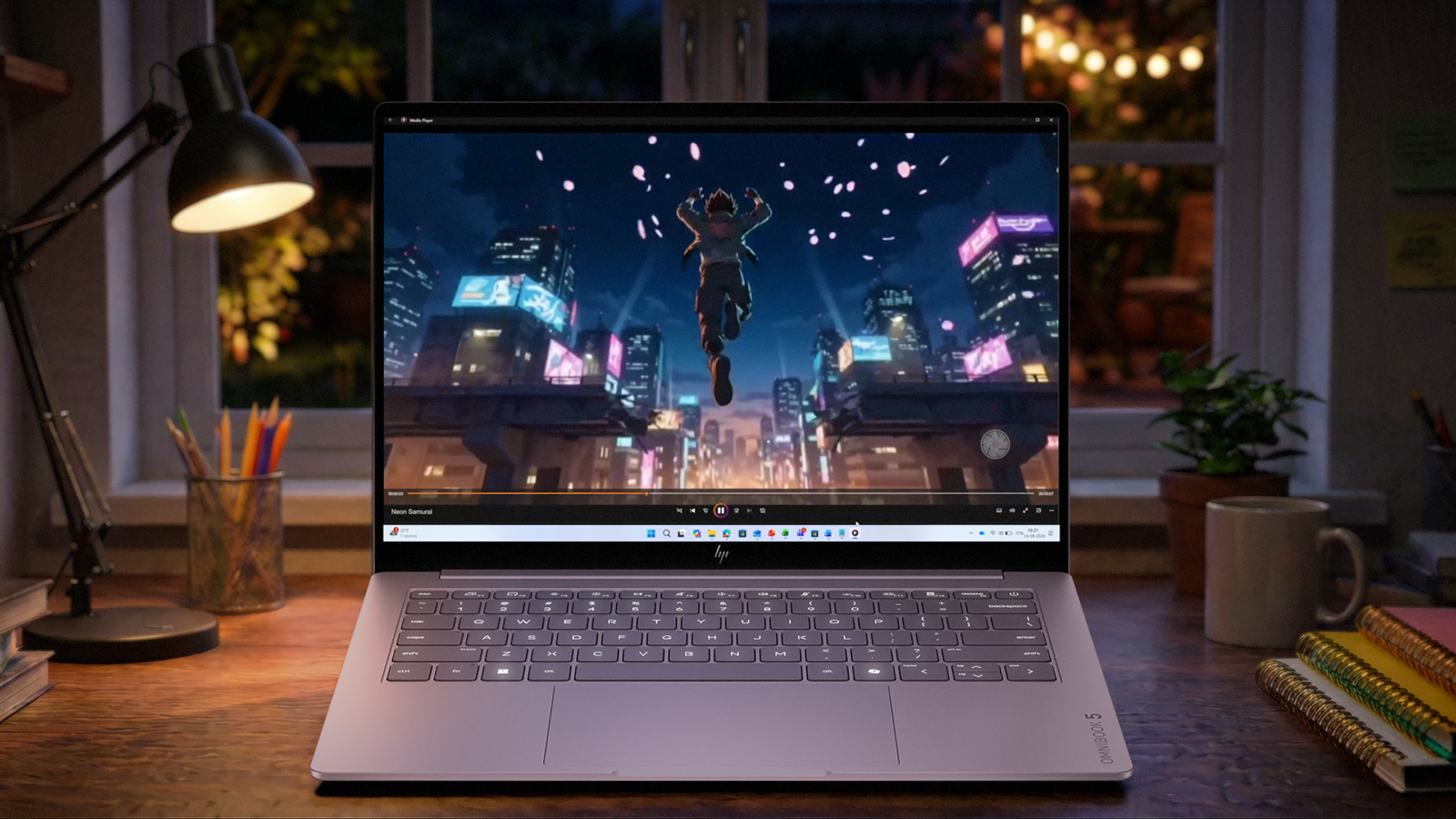
The HP OmniBook 5 has arrived as the latest budget laptop aiming to challenge Apple’s affordable MacBook Neo, priced at around £550. With a larger display and considerably longer battery life, HP’s new machine makes a compelling case in the increasingly crowded value segment.
When Apple’s budget MacBook launched in March, it represented strong value, using the iPhone’s A18 Pro chip to keep costs down and shipping at roughly £470. With the education discount applied, it was a near-unbeatable choice for students. In the months since, pressures on component supply chains have pushed the starting price upward, now settling at around £550. While the Neo remains more affordable than most rival machines, the higher price has created room for genuine competition.
Dell has already released the XPS 13, Lenovo is preparing the IdeaPad Vibe, and now HP has entered the contest with its own £550 OmniBook 5. The laptop’s pastel colour options are reminiscent of the MacBook Neo’s design.
Display and battery life lead the specification
The standout feature of the OmniBook 5 is its 14-inch 2K OLED display, with a resolution of 1,920×1,200 pixels. That screen is larger than the 13-inch Neo and even exceeds the 13.6-inch MacBook Air. The 300-nit maximum brightness may prove limiting in bright sunlight, but a display of this size is currently unprecedented at this price point. The only genuine rival is the upcoming IdeaPad Vibe, though Lenovo’s machine requires an OLED panel upgrade to match it.
The OmniBook range has consistently delivered strong battery life, and the OmniBook 5 continues that trend. HP states the laptop lasted up to 42 hours on a single charge during its local video playback test. While this is not directly comparable to online streaming battery assessments, it considerably outpaces the 13-hour figure recorded for the Neo, and runs eight hours longer than the OmniBook 3 16. These are meaningful achievements within the constraints of this price range.
Internal hardware and connectivity
The internal components are less impressive. The entry-level OmniBook 5 features an Intel Core 5 315 processor, just 8GB of RAM and a modest 256GB of onboard storage. This is fairly standard for a budget machine, though such specifications tend to stretch further on macOS than on a Windows device like this one.
The OmniBook 5 can be configured with up to Intel Core 7 350 silicon, 16GB of RAM and a 1TB SSD. Those spending more may be better served by stepping up to a midrange machine that meets their needs. The display can also be upgraded to a 2.5K OLED touchscreen option.
Connectivity is underwhelming, as expected from a budget laptop. The dual USB-C ports fall short of the Thunderbolt 4 standard, and USB-A connections are absent entirely, meaning adapters will likely be required for existing peripherals.
The HP OmniBook 5 joins the Dell XPS 13 and the forthcoming Lenovo IdeaPad Vibe as the latest challenger to Apple’s MacBook Neo, all priced at around £550.