
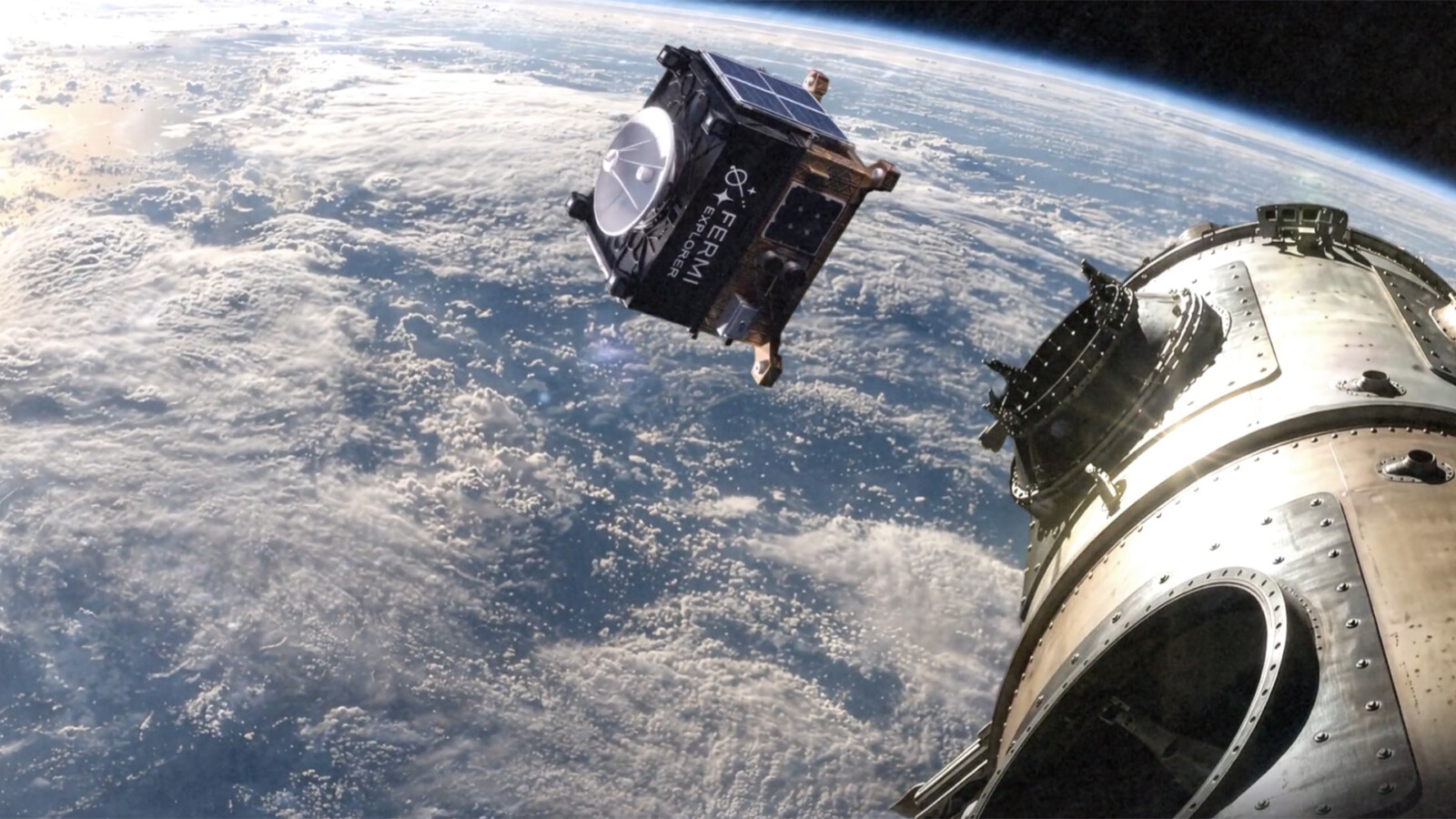
A group of executives and entrepreneurs led by Starcloud co-founders Philip Johnston, Adi Oltean and Ezra Feilden has come together to develop what they describe as humanity’s first interstellar spacecraft. Should everything proceed as planned, the mission will launch in 2029, bound for Alpha Centauri, the nearest star system to our own solar system. The journey, however, will take roughly 80,000 years to complete.
Named Fermi Explorer, this non-profit venture centres on building a 10cm cube weighing approximately 1 kilogram (around 2.2 pounds). Once assembled, the cube is to be fitted to a propulsion system, carried into space and launched towards Alpha Centauri. In practical terms, it amounts to sending a substantial object into space, pointing it at Alpha Centauri and waiting for it to arrive.
The group stated in a post on X that the mission is intended to make the concept of interstellar travel tangible, and to encourage more people to consider one of humanity’s most significant unanswered questions when looking beyond our planet. The accompanying video depicts the Fermi Explorer being overtaken by hundreds of faster spacecraft also travelling to Alpha Centauri.
A Journey Measured in Millennia
The precise duration to mission completion is 79,800 years, according to the Fermi Explorer mission calculator. In other words, once the craft is under way, its arrival will fall to generations many thousands of years removed from anyone alive today.
Simply leaving the solar system will take longer than any journey a human has ever undertaken. The spacecraft is expected to circle the Sun for 12 years in an oval orbit. Its boosters will fire as the craft nears the Sun, a technique known as the Oberth manoeuvre, building speed across multiple orbits as it approaches escape velocity. It will then propel itself onwards indefinitely. The mission’s technical feasibility assessment indicates it should leave the solar system by the early 2040s.
The project marks a notable departure from the usual focus of Starcloud’s co-founders, who typically work on placing data centres in space to power artificial intelligence. The company intends to launch its first full commercial data centre, Starcloud-2, in 2027, having already sent an Nvidia H100 GPU into space aboard Starcloud-1 in 2025.
Symbolic Rather Than Scientific
Interstellar travel takes so long that efforts have largely concentrated on accelerating the journey rather than actually making it. One prominent example was Breakthrough Starshot, a multi-billion-dollar initiative that would have used laser-based propulsion to reach another star within decades rather than millennia. That project ended in 2025 without a single launch.
The only other interstellar missions carried out to date, Voyager 1 and Voyager 2, entered interstellar space in 2012 and 2018 respectively, more than four decades after their launches. The stated purpose of the Fermi Explorer is drawn from the Fermi Paradox, which seeks to explain why humanity has yet to observe evidence of other civilisations in the cosmos.