
The Apple Store is now a familiar fixture, with locations spread across towns and cities worldwide. The retail chain stands as an unquestioned and unparalleled success, and Apple today holds enough financial strength that the failure of a single store would carry little consequence.
The picture looked very different in the late 1990s. According to Ron Johnson, the executive who worked alongside Steve Jobs to create the retail concept, Apple would not have survived had the stores never opened.
A Decision Met With Ridicule
When the plan for a chain of company-owned shops was first revealed, both Johnson and Jobs faced mockery from the business and finance press. The idea of Apple gambling millions on physical retail was widely doubted at the time, given the company’s precarious position.
Johnson has now stated that, despite the scepticism, opening the stores was not a luxury but a necessity. In his view, the retail venture was central to Apple’s continued existence rather than a mere expansion of its brand presence.
Recovering From the Brink
Apple spent the late 1990s slowly climbing away from what had appeared to be a terminal decline. The company was close to bankruptcy when Steve Jobs returned, and the accounts crediting the iMac and the iPod with saving the business hold true.
Against that backdrop, the retail gamble represented a substantial risk for a company still fighting to stabilise its finances. Johnson’s recollection places the stores alongside those landmark products as a defining factor in Apple’s turnaround, arguing that without them the recovery would not have been secured.
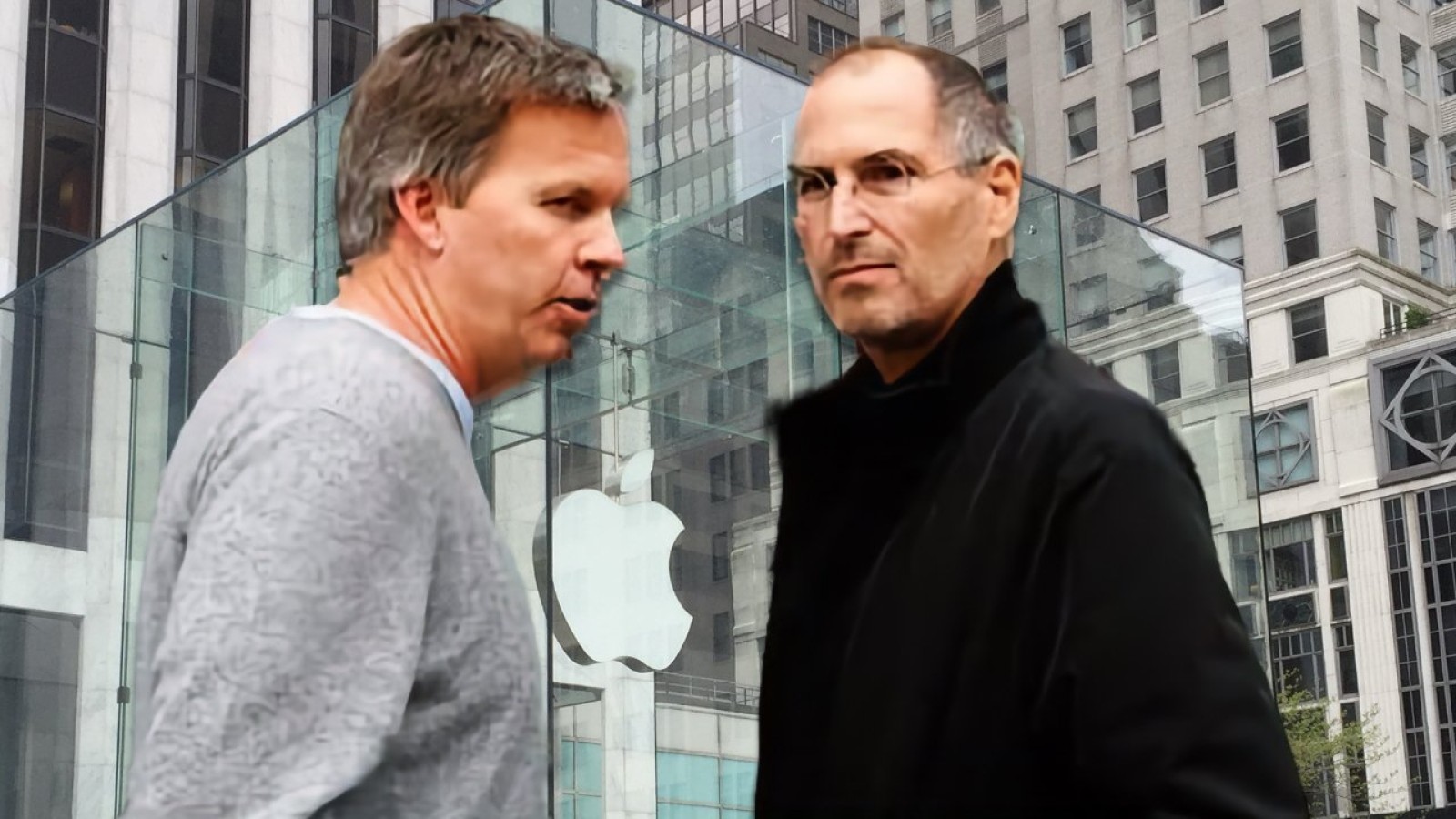
The retail strategy took shape around 2001, the period when Johnson and Jobs were photographed together working on the project. What began as a heavily criticised bet has since become one of the most recognisable elements of Apple’s global operations.
Source
Image: appleinsider.com