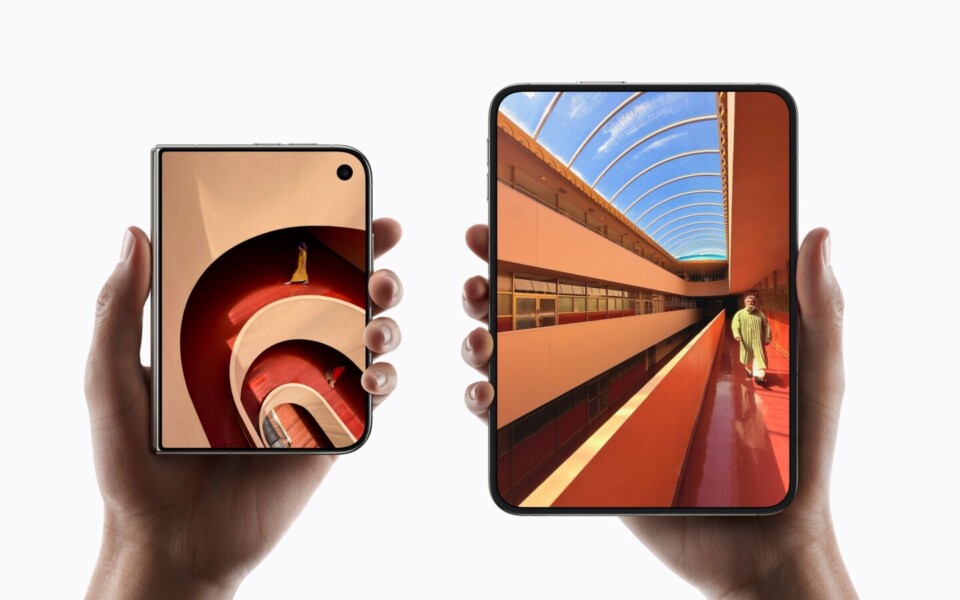

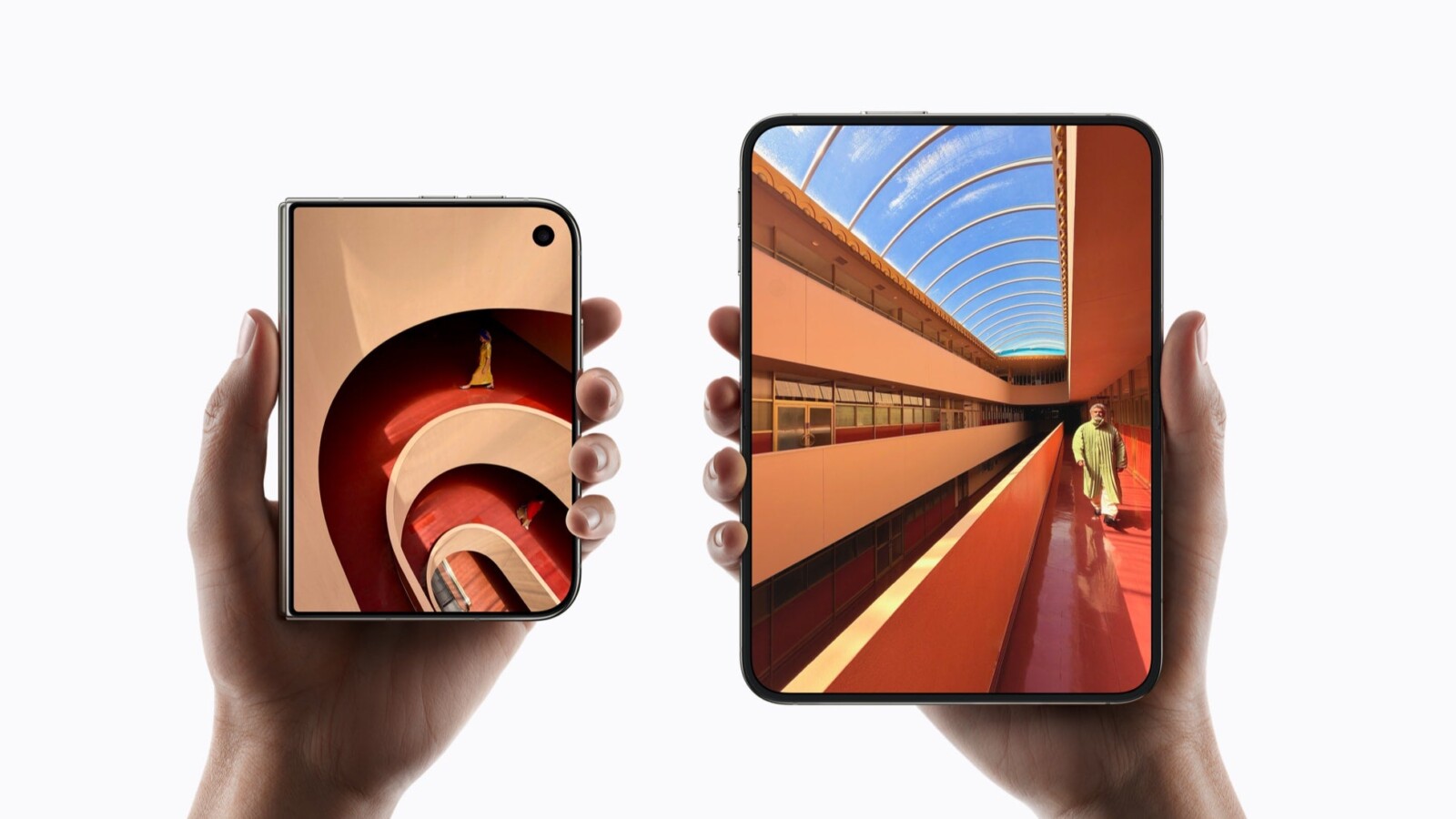
The iPhone Duo, Apple’s first foldable handset, has arrived largely as rumours and leaks had suggested. What sets it apart from rivals is an over-engineered combination of hinge and inner display, with Apple placing particular emphasis on the user experience and long-term durability of the device.
During the “Surprise and shine” event held on the morning of its unveiling, Apple dedicated a full segment to the internal display of the iPhone Duo, focusing on how it looks, how it feels, and how long it is designed to last.
An internal display unlike other foldables
Apple identified three common complaints about foldable displays: the crease, the plastic feel, and the tendency to scratch and dent. To tackle these, the company developed what it calls a nano-texture finish, which produces a matte effect and reduces glare and reflections. The same texture is intended to create a “perceptually flat” surface that feels better to the touch.
To achieve that flatness, a confocal laser progressively scans the topology of every unit and 3D prints up to 25 microlayers of a custom photopolymer to eliminate residual waviness, according to Johny Srouji, Apple’s Chief Hardware Officer.
On the durability front, Apple uses a custom polymer for a nano-textured cover layer that it says is 40% stiffer than other materials used across the industry. A scratch-resistant coating adds further protection. The internal structure features high-strength glass positioned both above and below the OLED panel, with a titanium layer on the underside for additional strength, an approach that echoes Samsung’s Flex Titanium technology used in the Galaxy Z Fold 8.
Apple also employs custom viscoelastic adhesives that allow the different display layers to glide relative to one another, much like the pages of a book. This helps the materials retain their integrity by relieving some of the stress generated when the panel bends.
An over-engineered hinge
If anything is more elaborate than the display, it is the hinge of the iPhone Duo. Apple designed it to deliver precise, smooth opening and closing while also supporting the centre of the display. To do so, the company used more than 100 tiny components, aiming for a satisfying feel when the device is folded and unfolded.
Apple said it uses AI algorithms to match individual hinges with the housings in which they best fit, ensuring precise alignment during assembly. Early first impressions of the device suggest Apple has succeeded on the user experience side, though how the design holds up over time remains to be seen.
The iPhone Duo combines a nano-texture finish, a titanium-backed multilayer display, custom viscoelastic adhesives and a hinge built from over 100 components.
Source
Image: phonearena.com